
Botrytis fabae
Faba bean
Botrytis fabae is a fungal pathogen belonging to the Fungi kingdom. It is a highly specialized parasite that exclusively targets specific legume species, particularly Vicia faba.
What the section contains
Botrytis fabae
The fungus produces masses of grey conidia on branching conidiophores. These spores serve as the primary inoculum for spreading the disease across a field.
Systematically, it is closely related to other Botrytis species, but it is distinguished by its narrow host range and specific pathogenicity factors adapted to beans.
It survives between growing seasons as sclerotia (hardened fungal masses) within crop debris or in the soil, and as mycelium within infected seeds.
The fungus requires high humidity and moderate temperatures to thrive, making the spring and autumn periods the most dangerous times for bean cultivation.
The primary host is the fava bean (Vicia faba). The pathogen affects all parts of the plant, including leaves, stems, flowers, and developing pods.
Significant damage occurs through the destruction of photosynthetic tissue, which weakens the plant and reduces overall biomass and grain development.
Lesions on the stems can cause structural weakness, leading to lodging, which significantly increases losses during harvesting operations.
When pods are infected, the pathogen can penetrate the shell and damage the developing seeds, resulting in poor quality produce and reduced seed viability.
Severe outbreaks can cause total crop failure, particularly when the cultivar is susceptible and environmental conditions favor rapid pathogen spread.
Infection cycles typically begin in early spring or autumn when temperatures range from 15 °C to 20 °C and moisture levels are consistently high.
Frequent rainfall, heavy fog, and dew provide the necessary surface moisture for conidia germination and subsequent entry into host tissues.
The flowering phase is highly susceptible, as the fungus quickly colonizes floral parts, which are often the entry point for systemic infection.
Secondary spread occurs throughout the growing season via wind dispersal and rain splashes, allowing the disease to move rapidly through dense plantings.
At the end of the season, the fungus produces resistant resting structures (sclerotia) that allow it to endure harsh winters in the field soil.
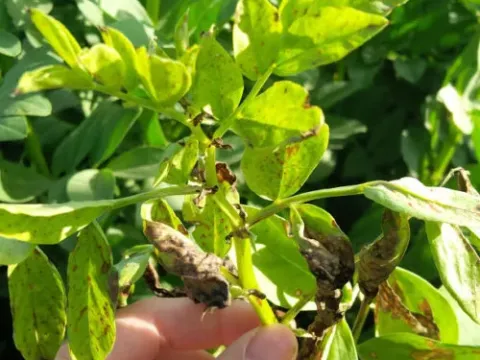
Initial symptoms are characterized by small, reddish-brown spots on the leaves, which eventually expand and turn grey in the center.
When humidity is high, a visible grey, fuzzy fungal growth appears on the affected leaf spots, indicating massive sporulation.
Stems exhibit elongated, sunken necrotic lesions that can girdle the stem and lead to plant wilting and collapse.
Infected flowers become brown, wither, and drop prematurely, leading to a significant reduction in pod set and yield.
- Reddish-brown leaf spots (chocolate spot).
- Grey fungal mycelium on necrotic tissues.
- Dark lesions on stems causing structural failure.
- Flower blight and premature abscission.
- Seed discoloration and pod rot.
Cultural control is the first line of defense; farmers should implement a 3-4 year crop rotation to prevent the buildup of sclerotia in the soil.
Sourcing high-quality, certified, disease-free seed is essential to prevent the introduction of the pathogen into new areas.
Sanitation measures, including the deep burial or burning of infected crop residue, significantly reduce the primary inoculum load for the next season.
Fungicide applications are recommended when weather conditions are conducive to disease development, especially during the early bloom stage.
Maintaining adequate spacing between rows improves airflow, lowers micro-humidity within the canopy, and naturally inhibits fungal proliferation.