
Botrytis fabae
Broad bean
The pathogen is a fungus known as Botrytis fabae, belonging to the kingdom Fungi and the phylum Ascomycota. It is the primary cause of chocolate spot disease in various bean species.
What the section contains
Botrytis fabae
The fungus produces a greyish mycelium and unicellular conidia that serve as the main agents for rapid spread throughout the field. It also forms sclerotia, which are dormant structures used for long-term survival in soil.
The pathogen is highly specialized and thrives in temperate climates, effectively exploiting seasonal moisture to colonize susceptible host tissues across agricultural landscapes.
Its biological cycle is intricately linked to host phenology, allowing the fungus to exploit the nutrients within the plant during active vegetative growth and reproductive stages.
Laboratory diagnosis involves examining the characteristic conidiophores and spore morphology to confirm the presence of Botrytis fabae in suspected crop samples.
##damage##The main host of Botrytis fabae is the broad bean (Vicia faba). The disease affects all aerial parts of the plant, including foliage, stems, flowers, and pod tissues.
Significant economic impact occurs through the reduction of photosynthetic area, which leads to stunted growth and a substantial decrease in total seed yield per hectare.
In addition to yield loss, the quality of the harvested grain is severely compromised, rendering it unsuitable for market sale or for use as high-quality planting material.
Under severe outbreak conditions, the pathogen can cause total defoliation and plant death, leaving only necrotic debris that serves as an inoculum source for subsequent seasons.
The damage is cumulative; as the infection progresses, the plant's structural integrity weakens, making it more susceptible to environmental stressors and other opportunistic pathogens.
##season##Infection cycles typically initiate in early spring when environmental conditions, such as high humidity and frequent rainfall, favor the germination of fungal spores.
The disease reaches its maximum intensity during the flowering and pod-filling stages, as the plant canopy becomes denser and traps moisture, creating a perfect microclimate for the pathogen.
Optimal temperatures for disease development range between 15°C and 20°C, combined with prolonged periods of leaf wetness which are essential for fungal colonization.
Throughout the growing season, the pathogen produces multiple cycles of spores, facilitating rapid secondary spread and leading to potential epidemics in susceptible bean cultivars.
As the harvest season approaches, the fungus transitions into a dormant state, producing sclerotia that persist in crop residues or the soil until the next favorable growing season.
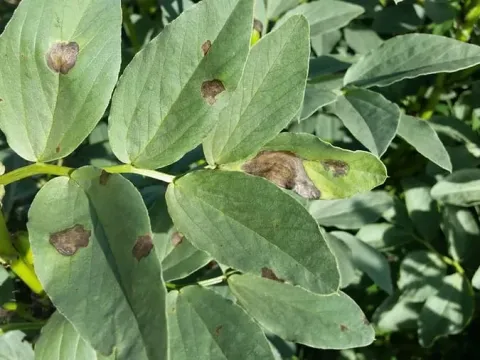
##signs##The initial symptoms present as small, reddish-brown spots on the leaves that quickly expand and develop into distinct chocolate-colored lesions with darker margins.
Stems often show elongated dark brown lesions, which can lead to structural weakness, causing stems to snap or lodge during heavy rainfall or strong winds.
High humidity promotes the emergence of a fluffy grey fungal growth on the surface of these lesions, composed of vast quantities of conidia ready for aerial dissemination.
Infected flowers frequently turn black and shrivel, resulting in premature abscission and preventing the formation of healthy pods, which severely impacts overall productivity.
- Reddish-brown spots on leaves.
- Grey fuzzy mold on necrotic areas.
- Dark necrotic lesions on stems.
- Premature flower and leaf senescence.
Crop rotation remains the most effective long-term management strategy, with a recommended gap of at least 3-4 years before re-planting host crops in the same area.
Sanitation practices, including the deep burial or removal of infected crop residues, are crucial to reducing the primary inoculum of sclerotia present in the soil.
Utilizing high-quality, treated seed lots is essential to prevent the introduction of the pathogen into new fields and to ensure vigorous early plant development.
Managing plant spacing and effective weed control helps to optimize air circulation within the canopy, reducing the duration of leaf wetness that the fungus requires for infection.
Fungicide applications, when performed according to regional guidelines, can provide critical protection during high-risk periods, especially when weather conditions favor rapid disease spread.