
Botrytis
Botrytis
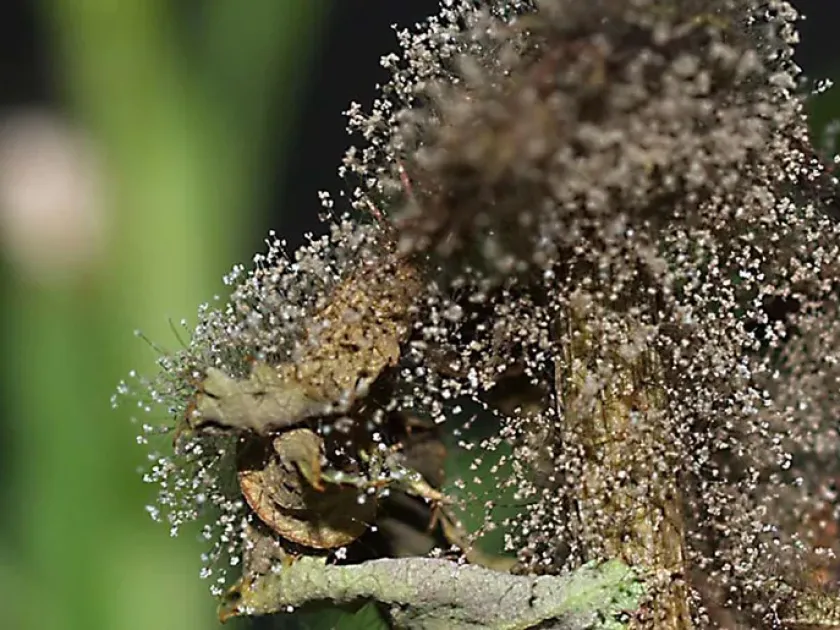
Description
How to identify
Botrytis is a genus of anamorphic fungi in the family Sclerotiniaceae, order Helotiales. The most significant and widespread species is Botrytis cinerea, which is the primary cause of gray mold disease in a vast array of plant species.
This pathogen acts as a facultative parasite, capable of surviving on both living tissues and decaying organic matter. During its lifecycle, the fungus produces gray mycelium, conidiophores bearing conidia, and hard black sclerotia that serve as survival structures.
Systematically, Botrytis is the anamorphic stage of the fungus known as Botryotinia fuckeliana. It is characterized by an extremely broad host range, infecting almost all types of agricultural, horticultural, and ornamental crops globally.
Fungal spores are extremely lightweight and are dispersed easily by wind, rain splashes, or contaminated tools and clothing. The pathogen can persist in the soil for several years in the form of dormant sclerotia until conditions become suitable for germination.
The fungus invades plant tissue through natural openings, stomata, or physical wounds. Once established, it secretes cell wall-degrading enzymes that break down plant tissues, allowing the mycelium to spread rapidly within the host organism.
What it damages
Botrytis affects over 200 plant species, including major crops like strawberries, grapes, tomatoes, cucumbers, and many ornamental flowers. It causes significant economic losses worldwide, particularly in greenhouses and high-value fruit production.
The pathogen can infect almost all plant parts, including roots, stems, leaves, flowers, and fruits. It is particularly devastating during the ripening phase, as high sugar content in maturing fruits makes them highly susceptible to rapid fungal colonization.
Post-harvest decay is a major issue associated with Botrytis. When infected produce is stored, the fungus can spread from a single fruit to the entire container, leading to significant spoilage and financial losses within a very short timeframe.
For ornamental crops like roses, lilies, and tulips, Botrytis causes blighting of flower buds, leading to the failure of blooms and a loss of marketability. This is a critical management concern for commercial floriculture operations.
In nurseries, Botrytis poses a severe threat to seedlings and cuttings. By damaging the vascular system, the fungus can lead to the widespread collapse and death of young plants, significantly increasing production costs due to high mortality rates.
When it appears
The active development of Botrytis is favored by high humidity (above 80%) and moderate temperatures ranging from 15°C to 25°C. These conditions often trigger massive outbreaks in fields and greenhouse environments.
In greenhouses, the fungus can thrive year-round if humidity levels are not controlled and ventilation is poor. Improper climate management and dense canopy structures facilitate the buildup of inoculum and rapid transmission of the disease.
Spring and autumn seasons, characterized by frequent rainfall and cool temperatures, provide an ideal environment for the infection of young shoots and blossoms. Cold air pockets in low-lying areas often become hotspots for early disease outbreaks.
While extreme summer heat and drought can slow down fungal development, the presence of surface moisture, such as morning dew or fog, allows the pathogen to survive and infect sensitive plant tissues even during warmer periods.
After overwintering, sclerotia germinate to produce conidia, which serve as the primary source of infection at the start of the growing season, particularly when plants are emerging or blooming.
Signs of infestation
The most distinctive symptom of Botrytis is the development of a fuzzy, gray fungal growth, which consists of masses of conidia. This "gray mold" rapidly covers infected tissues, turning them into a soft, water-soaked, and necrotic mass.
Leaves often exhibit brown necrotic lesions that can vary from irregular shapes to clear concentric patterns. Under humid conditions, these spots quickly become covered in the characteristic gray sporulation.
On fruits and berries, the infection manifests as brown lesions that expand rapidly. The underlying tissue softens and darkens, making the product unpalatable and non-marketable in a matter of days.
Stem infections can lead to girdling or "choking" of the plant, which results in wilting and the death of the upper portions. This is a common occurrence in young tomato plants and fruit trees when moisture management is neglected.
Flower infections typically present as tiny brown spots on petals. If conditions remain favorable, these spots coalesce, leading to the complete rotting of buds and their premature drop before they ever have the chance to open.
Control measures
Effective management of Botrytis requires an integrated approach that combines cultural practices, biological control, and chemical fungicides. The primary goal is to reduce moisture levels and create an environment unfavorable for fungal growth.
- Improving greenhouse ventilation and air circulation to reduce humidity.
- Removing and destroying infected plant debris to eliminate sources of sclerotia.
- Practicing crop rotation and avoiding over-irrigation or overhead watering.
- Applying systemic or contact fungicides during critical growth stages.
- Sanitizing tools and storage containers to prevent the mechanical spread of spores.
Chemical control programs must incorporate the rotation of fungicides with different modes of action to prevent the development of resistance in Botrytis populations, which is a common issue with this pathogen.
Biological control agents, such as beneficial strains of Bacillus subtilis or Trichoderma, are increasingly used as preventive measures. These agents can effectively suppress fungal growth and are highly valued in organic farming systems.
Optimal plant nutrition is also vital; avoiding excessive nitrogen fertilization helps keep plant tissues sturdy and less prone to infection, while balanced potassium and calcium levels can enhance natural plant resistance to decay.
Causes diseases · 1
Discussion
No discussions yet — be the first.