


SKU #37634
·
26 views
Wheat Odessa Factor
Wheat
User rating
0 votes0% positive reviews
No ratings yet — be the first.
Type of Development
Winter wheat
Wheat Type
Soft wheat variety
Ostistost'
Ostistaya
Growing Season
280-290 days
Prices in stores
from0.32 €per 1 kg
pack from 324.31 € per 1 t
1 offer from 1 store
Store offers · 1 from 1 stores
Prices are updated on loadLoading offers…
Available at: Agromen
Aggregator catalog: prices are collected automatically from store websites, normalized by AI and converted at the current exchange rate. Before ordering, confirm the price and availability on the store's website. This block is not indexed by search engines — the data is loaded after the page opens.
About product

Odessa Factor — early winter wheat variety, developed by the Selection-Genetic Institute of the National Center for Seed Production and Variety Testing of Ukraine. This variety is characterized by intensive growth and development of plants in the autumn period, as well as the ability to quickly and repeatedly harden, ensuring high resistance to late sowing. Morphologically, Odessa Factor resembles…
Type of Development
Winter wheat
Wheat Type
Soft wheat variety
Ostistost'
Ostistaya
Growing Season
280-290 days
Description
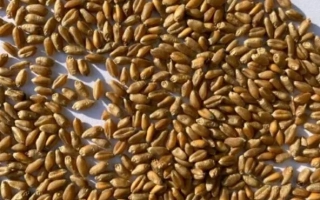
Odessa Factor — early winter wheat variety, developed by the Selection-Genetic Institute of the National Center for Seed Production and Variety Testing of Ukraine. This variety is characterized by intensive growth and development of plants in the autumn period, as well as the ability to quickly and repeatedly harden, ensuring high resistance to late sowing. Morphologically, Odessa Factor resembles the Octava Odessa variety, featuring a white pyramidal ear and large red kernels weighing 43.2–45.8 g per 1000 kernels. High productive tillering and large ears contribute to stable yields of 51.8–56.6 c/ha.
The variety exhibits high resistance to various stress factors and diseases: resistance to lodging is rated 7.6, to shattering — 8.7, to drought and frost — 8.3, as well as to brown rust, fusarium, and powdery mildew — 8.3. Odessa Factor demonstrates stable yield performance under various agronomic conditions, effectively utilizes low and medium doses of nitrogen fertilizers (60–90 kg N/ha) and is suitable for cultivation following non-traditional predecessors such as sunflower, rapeseed, mustard, and flax.
The grain of this variety has high quality: protein content is 12.5–13.7%, gluten — 28–33%, and dough strength reaches 355–395 units. Maturation period — 285–287 days; heading and maturation occur 1–2 days later than the Antonovka variety. Recommended cultivation zones include steppe, forest-steppe, and lowland areas. Odessa Factor is intended for grain use and provides high yield and quality, making it an attractive choice for agricultural producers.
The variety exhibits high resistance to various stress factors and diseases: resistance to lodging is rated 7.6, to shattering — 8.7, to drought and frost — 8.3, as well as to brown rust, fusarium, and powdery mildew — 8.3. Odessa Factor demonstrates stable yield performance under various agronomic conditions, effectively utilizes low and medium doses of nitrogen fertilizers (60–90 kg N/ha) and is suitable for cultivation following non-traditional predecessors such as sunflower, rapeseed, mustard, and flax.
The grain of this variety has high quality: protein content is 12.5–13.7%, gluten — 28–33%, and dough strength reaches 355–395 units. Maturation period — 285–287 days; heading and maturation occur 1–2 days later than the Antonovka variety. Recommended cultivation zones include steppe, forest-steppe, and lowland areas. Odessa Factor is intended for grain use and provides high yield and quality, making it an attractive choice for agricultural producers.
Crop & resistance
Crop
Disease resistance
Specifications hover over for a hint about the specification
| Type of Development | |
|---|---|
|
Wheat Type
Wheat Type
Biologically hard wheat differs from soft wheat in its greater demand for soil fertility and agronomic conditions (especially regarding field cleanliness from weeds), lower drought resistance and plasticity, relatively weaker root development, especially nodal roots, and lower ti... |
|
| Ostistost' | |
| Growing Season | 280-290 days |
| Seed: mass 1.000 pcs seeds | 40-45 grams |
|
Grain: gluten content
Grain: gluten content
Raw gluten of grain is a hydrated protein and consists of water-insoluble protein fractions, as well as a small amount of starch, fats, and other substances firmly bound by proteins. Since gluten is primarily composed of proteins, its yield and quality depend on the quantity and... |
25-30% |
| Resistance to lodging | |
| Potential Yield | 5-6 tons |
| Registration year | 2020 |
| Catalog | Catalog → Wheat |
| Legal data |
Show · 1
|
| Country | Ukraine |
Not yet комментариев. Be the first!
Alternatives
Wheat seeds · similar varieties




See also
Often considered together with this variety






Recently viewed
Products you’ve viewed on this site
Reviews · 0