


SKU #59228
·
38 views
Leo
Wheat
User rating
0 votes0% positive reviews
No ratings yet — be the first.
Type of Development
Winter wheat
Wheat Type
Soft wheat variety
Growing Season
90-100 days
Plant; height
40-50 cm
About product

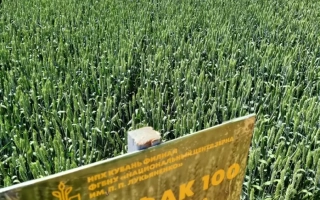
LEO is a soft winter wheat (Triticum aestivum L.) variety characterized by a medium-early growing season and a two-row grain type. This variety is distinguished by its low stature and short stem, which ensures resistance to lodging and enhances adaptability to various growing conditions. LEO possesses high drought tolerance, making it a reliable choice for regions with limited moisture. The weight…
Type of Development
Winter wheat
Wheat Type
Soft wheat variety
Growing Season
90-100 days
Plant; height
40-50 cm
Description
LEO is a soft winter wheat (Triticum aestivum L.) variety characterized by a medium-early growing season and a two-row grain type. This variety is distinguished by its low stature and short stem, which ensures resistance to lodging and enhances adaptability to various growing conditions. LEO possesses high drought tolerance, making it a reliable choice for regions with limited moisture. The weight of 1000 grains is 36–40 grams, indicating large-grainedness and high crop quality.
The LEO variety is recommended for cultivation in the North Caucasus region, Krasnodar Krai, as well as the Northwest, Azov, and South zones of the Rostov region. It demonstrates high yield, with a potential indicator of over 100 centners of grain per hectare when optimal agrotechnical conditions are met. The average yield in the specified regions is about 54.7 c/ha. The sowing rate is 3.5 million viable seeds per hectare, and 2.5 million in favorable years.
LEO is distinguished by high resistance to major wheat diseases, including brown and yellow rust, Fusarium head blight, powdery mildew, septoria, and leaf spotting. Thanks to these properties, the variety is suitable for cultivation using low-pesticide technologies, which allows obtaining high-quality grain free of fusarium toxins. The main purpose of the variety is the production of bakery products, for which LEO grain possesses excellent milling and baking qualities.
The LEO variety is recommended for cultivation in the North Caucasus region, Krasnodar Krai, as well as the Northwest, Azov, and South zones of the Rostov region. It demonstrates high yield, with a potential indicator of over 100 centners of grain per hectare when optimal agrotechnical conditions are met. The average yield in the specified regions is about 54.7 c/ha. The sowing rate is 3.5 million viable seeds per hectare, and 2.5 million in favorable years.
LEO is distinguished by high resistance to major wheat diseases, including brown and yellow rust, Fusarium head blight, powdery mildew, septoria, and leaf spotting. Thanks to these properties, the variety is suitable for cultivation using low-pesticide technologies, which allows obtaining high-quality grain free of fusarium toxins. The main purpose of the variety is the production of bakery products, for which LEO grain possesses excellent milling and baking qualities.
Crop & resistance
Crop
Specifications hover over for a hint about the specification
| Type of Development | |
|---|---|
|
Wheat Type
Wheat Type
Biologically hard wheat differs from soft wheat in its greater demand for soil fertility and agronomic conditions (especially regarding field cleanliness from weeds), lower drought resistance and plasticity, relatively weaker root development, especially nodal roots, and lower ti... |
|
| Growing Season | 90-100 days |
| Plant; height | 40-50 cm |
| Seed: mass 1.000 pcs seeds | 35-40 grams |
| Resistance to lodging | |
| Potential Yield | 9-10 tons |
| Registration year | 2022 |
| Catalog | Catalog → Wheat |
| Legal data |
Show · 1 |
| Country | Russia |
Store offers
Prices are updated on loadLoading offers…
Aggregator catalog: prices are collected automatically from store websites, normalized by AI and converted at the current exchange rate. Before ordering, confirm the price and availability on the store's website. This block is not indexed by search engines — the data is loaded after the page opens.
Not yet комментариев. Be the first!
Alternatives
Wheat seeds · similar varieties




See also
Often considered together with this variety







Recently viewed
Products you’ve viewed on this site
Reviews · 0