


SKU #59993
·
31 views
BEZENCHUKSKAYA STEPNAYA
Wheat
User rating
0 votes0% positive reviews
No ratings yet — be the first.
Type of Development
Spring wheat
Wheat Type
Hard wheat
Ostistost'
Ostistaya
Growing Season
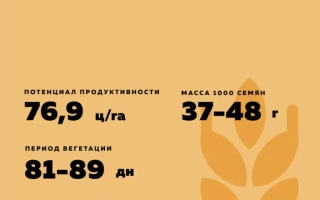
80-90 days
About product

Hard spring wheat of the "Bezenchukskaya Stepnaya" variety (Triticum durum Desf.) is a medium-maturing agricultural crop with a vegetation period of 77 to 90 days. The plant is characterized by a semi-erect bush and medium-height straw with a strong waxy bloom on the glume, leaf blade of the flag leaf, straw neck, and ear. The ear is pyramidal, medium length and density, with white awns that are l…
Type of Development
Spring wheat
Wheat Type
Hard wheat
Ostistost'
Ostistaya
Growing Season
80-90 days
Description
Hard spring wheat of the "Bezenchukskaya Stepnaya" variety (Triticum durum Desf.) is a medium-maturing agricultural crop with a vegetation period of 77 to 90 days. The plant is characterized by a semi-erect bush and medium-height straw with a strong waxy bloom on the glume, leaf blade of the flag leaf, straw neck, and ear. The ear is pyramidal, medium length and density, with white awns that are longer than the ear. The grain is elongated, light-colored, with a short or medium awn; the mass of 1000 grains varies from 35 to 49 grams. The variety belongs to the leucomurm group and is distinguished by drought and lodging resistance at the standard level. The "Bezenchukskaya Stepnaya" variety is recommended for cultivation in the Middle Volga, Lower Volga, and Ural regions, including the Saratov, Samara, and Orenburg regions. The yield of the variety in these regions ranges from 12.2 to 22.9 centners per hectare, with the maximum registered yield reaching 38.2 c/ha. The variety demonstrates moderate resistance to brown rust and hard head smut, as well as weak infection with dusty head smut and strong infection with powdery mildew. The vegetation period and disease resistance make this variety attractive for cultivation in arid climate conditions. To increase yield and ensure stable plant development, the application of comprehensive agronomy is recommended, including treatment with biological preparations, herbicides, and fungicides, as well as the application of mineral nitrogen fertilizers. The use of the "Maximum" program contributes to optimal growth and development of wheat, increasing seed mass and overall crop productivity. Thus, "Bezenchukskaya Stepnaya" is a reliable choice for farmers focused on producing high-quality hard spring wheat with satisfactory pasta qualities.
Crop & resistance
Crop
Specifications hover over for a hint about the specification
| Type of Development | |
|---|---|
|
Wheat Type
Wheat Type
Biologically hard wheat differs from soft wheat in its greater demand for soil fertility and agronomic conditions (especially regarding field cleanliness from weeds), lower drought resistance and plasticity, relatively weaker root development, especially nodal roots, and lower ti... |
|
| Ostistost' | |
| Growing Season | 80-90 days |
| Seed: mass 1.000 pcs seeds | 35-40 grams |
| Resistance to lodging | |
| Potential Yield | 9-10 tons |
| Registration year | 2004 |
| Catalog | Catalog → Wheat |
| Legal data |
Show · 9
|
| Country | Russia |
Store offers
Prices are updated on loadLoading offers…
Aggregator catalog: prices are collected automatically from store websites, normalized by AI and converted at the current exchange rate. Before ordering, confirm the price and availability on the store's website. This block is not indexed by search engines — the data is loaded after the page opens.
Not yet комментариев. Be the first!
Alternatives
Wheat seeds · similar varieties




See also
Often considered together with this variety






Recently viewed
Products you’ve viewed on this site
Reviews · 0