The Matrasa grape variety is one of the best native Azerbaijani varieties belonging to the eco-geographical group of eastern varieties. This ancient technical variety likely formed through folk selection from wild species and received its name after a similarly named village in the Shemakha region of Azerbaijan. Outside its native region, Matrasa is widely grown in Dagestan, Central Asian republics, Crimea, and other regions. The vine has medium vigor, with one-year shoots that ripen well. Leaves are large, deeply lobed, five- or seven-lobed, with characteristic notches and no pubescence on the underside. Flowers are hermaphroditic, but under unfavorable conditions, there may be flower bud and fruit drop.
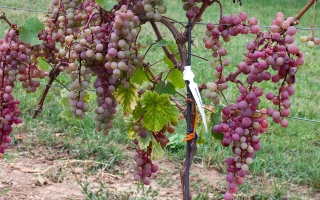
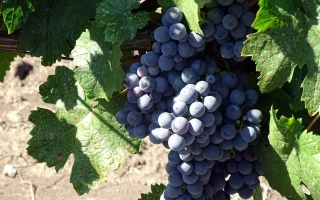
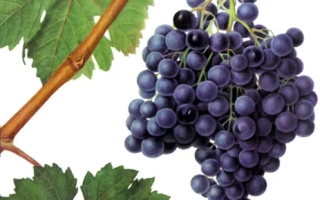
Bunches of Matrasa are of medium size, broad-conical, branched, medium-dense or loose, with a weight of about 120 grams. Berries are oval, dark blue with a dense waxy bloom, have a thick but fragile skin, and juicy greenish flesh. The flavor is harmonious, with high sugar accumulation — up to 23% and higher, with acidity around 7.5 g/l. In some regions, such as Crimea, sugar content reaches 28 g/100 ml. The vegetative period lasts about 150 days, and harvest occurs at the end of September to the beginning of October, depending on the type of wine produced.
Matrasa is characterized by high yield — in dryland cultivation, it exceeds 40-50 centners/ha, and with irrigation and proper agronomy, it can reach up to 90 centners/ha. The variety is susceptible to mildew, oidium, and gray mold, as well as damage from grapevine leafroller and phylloxera. It has low frost resistance, and at temperatures around -20 °C, vines lose a significant portion of buds. Nevertheless, the variety is relatively resistant to drought and chlorosis. Grapes from the Matrasa variety produce high-quality, well-colored table and dessert wines, including kagora and port-style wines, as well as grape juice. The variety has good aging potential, making it valuable for winemaking.