


SKU #46131
·
74 views
Grape Black Muscat
Grape
Usage Group
Wine, Universal
Ripening Period
Mid-late
Frost Resistance
Low (up to -18°C)
Resistance to Mildew
Average
Your mark
0 votes
0% positive ratings
Store offers · 1 from 1 store
1 offer in 1 store — from 2.14 € per seedling.
Available at: САД-МАРКЕТ
Prices are collected automatically from store websites and converted at the current exchange rate. Check the price and availability on the store website before ordering.
Description
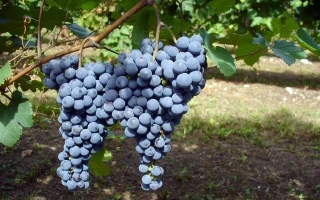
The Black Muscat grape variety is a late-ripening, hermaphroditic variety with universal use, known since the first half of the 19th century, especially widespread on the Southern coast of Crimea. The leaves of this variety are medium-sized, round or weakly to moderately lobed, with 3-5 lobes and a funnel-shaped form. Bunches are cylindric-conical or conical, dense, small or medium-sized, weighing from 75 to 1500 grams, with berries dark blue or black, round, covered with a dense bloom, with tender juicy flesh and a weak muscat aroma. The grape juice is colorless, with a sugar content of about 21.5% and acidity of 7.5-8 g/l. The Black Muscat variety is characterized by a medium-late ripening period — from bud break to technical maturity, it takes 137 to 149 days, usually the grapes ripen at the beginning of September. For obtaining a sweeter must, harvesting is conducted later. Yield varies from 40 to 100 centners per hectare. The variety has low frost resistance, but due to its late bud break, it is less susceptible to spring frosts. The variety is relatively resistant to foliar fungal diseases and berry gray rot, but can be affected by leafrollers. Black Muscat requires specific growing conditions and soil moisture. It develops better on soils rich in organic matter, which promotes higher yields, but in this case, the quality of the grapes may decrease. The variety does not tolerate excessive lime content in the soil. Wines of this variety are used to produce branded dessert wines, such as "Zolotoye Pole", as well as liqueur wines blended with the Aleatico variety.
Video · 5 videos
Suggest a video →Crop & resistance
Crop
Disease resistance
Specifications
| Usage Group | |
|---|---|
| Ripening Period | Mid-late |
| Frost Resistance | |
| Resistance to Mildew | |
| Resistance to oidium | |
| Resistance to Gray Mold | |
| Yield | High |
| Bush Growth Power | |
| Flower Type | |
| Bunch Size | Medium (300–500 g) |
| Berry Size | Large (5–8 g) |
| Berry Color | |
| Flavor | |
| Sugar Content | High (>20%) |
| Zoning | |
| Care Requirement | |
| Purpose | |
| Registration year | 1958 |
| Catalog | Catalog → Grape |
| Country | Ukraine |
No reviews yet. Be the first to share your experience.
Alternatives
Grapevine saplings · similar varieties




TEACHER'S MEMORY
Omsk State Agrarian University named after P.A. Stolypin
063 15 offers
2.61 €per seedling ≈ 133 ₴
See also
Often considered together with this variety






Recently viewed
Products you’ve viewed on this site
Reviews