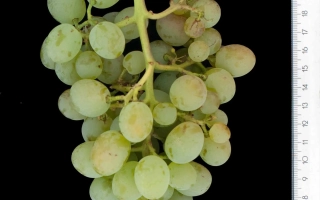
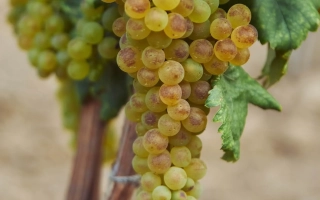
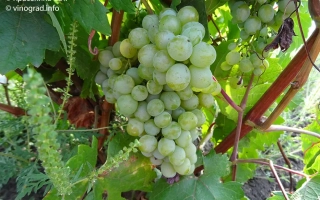
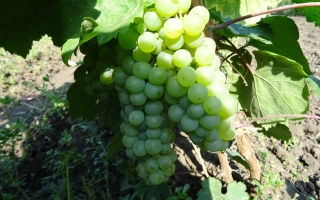
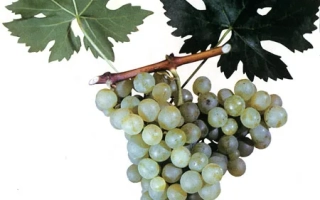
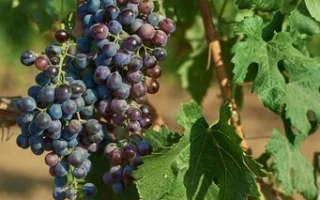
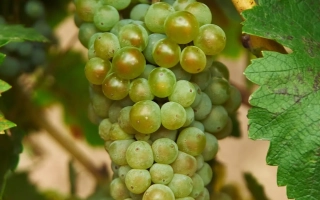
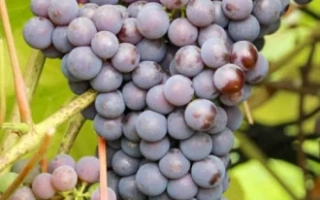
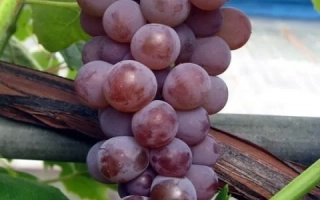
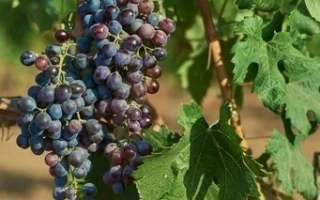
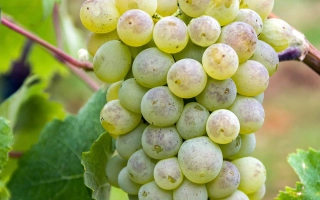
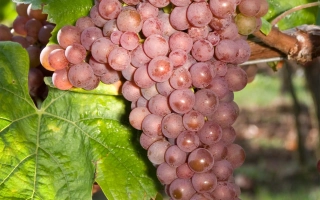
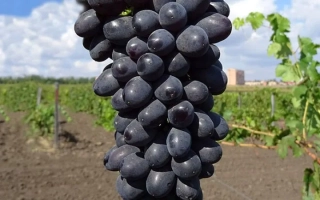
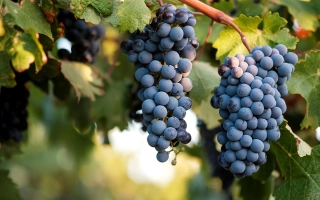
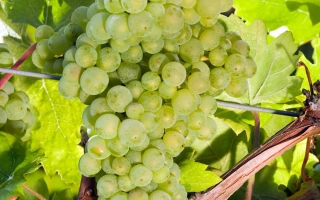
Kirmizi Sap Sudaksky is a local grape variety characteristic of the Republic of Crimea, belonging to the late ripening period. This variety is primarily used for technical purposes, in particular for the production of table and dessert wines. Bushes are vigorous with large leaves, which can be five-lobed or three-lobed, without pubescence. Bunches have a cylinder-cone shape and vary in density, with an average bunch mass ranging from 256 to 350 grams. Berries are elongated egg-shaped, green-yellow in color, with thin skin and fleshy, crunchy pulp. The juice is colorless; berries contain about 20.4 g of sugar per 100 cm³ and 5.2 g/dm³ of titratable acids, providing a light and harmonious taste with spicy aftertaste and floral-spicy aroma with notes of dried grass. The variety differs in medium yield, reaching approximately 91.1 centners per hectare, and possesses good winter hardiness, withstanding temperatures down to -21°C. Despite this, Kirmizi Sap Sudaksky is sensitive to fungal diseases such as downy mildew, powdery mildew, and gray rot, which requires careful care and preventive measures. It also tolerates periodic droughts well, making it suitable for cultivation in the conditions of Crimea. The ripening period comes late — from the end of September to the beginning of October. This grape variety is autochthonous to Crimea and was isolated from old vineyards of the Sudak district, where it occurred as single bushes. Currently, it is less common and is more often found in collection plantings. Thanks to its valuable economic characteristics, Kirmizi Sap Sudaksky is used in breeding and wine production, confirmed by its inclusion in the state register of breeding achievements.