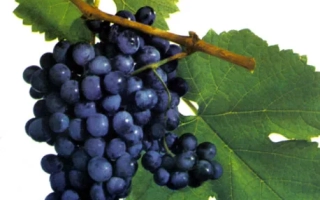
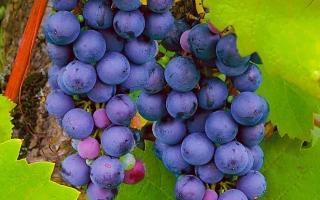
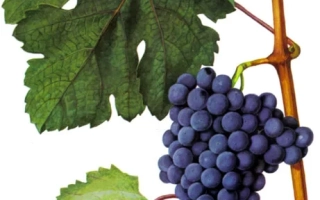
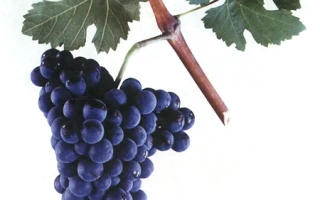
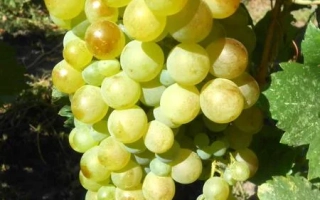
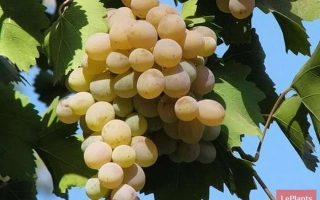
Cabernet Sauvignon is a technical grape variety developed in France and widely distributed in many countries around the world, especially in Bordeaux. This mid-late variety is characterized by a long growing season of 140 to 165 days, which allows the berries to fully ripen and reveal their rich bouquet. The vine is vigorous, with bisexual flowers, ensuring good fruit set and stable yield. Bunches have a cylinder-cone shape, medium in size, sometimes with a small wing, and differ in medium looseness. Berries are medium-sized, round, dark blue with abundant waxy bloom, have thick and rough skins, and juicy flesh with colorless juice. The variety is distinguished by high resistance to diseases such as downy mildew and gray rot, as well as good resistance to phylloxera and grape moth. Cabernet Sauvignon is relatively drought-resistant and has moderate winter hardiness, withstanding temperatures down to -25 °C. However, in dry years, berries and bunches may be smaller. A feature of the variety is its tendency to flower drop and berry shriveling, as well as low yield of substitute and dormant buds. To increase fruiting, short pruning of one-year-old shoots is recommended. This grape is widely used for producing premium red table wines and sparkling wine materials. Wines made from Cabernet Sauvignon are characterized by high tannin content and a rich aroma, in which notes of blackcurrant, juniper, and nightshade are clearly audible. Due to its taste qualities and resistance to adverse conditions, Cabernet Sauvignon is one of the most popular and in-demand grape varieties in the world.