


SKU #61999
·
44 views
Grape EARLY PURPLE
Grape
FRSCUser rating
0 votes0% positive reviews
No ratings yet — be the first.
Usage Group
Universal
Ripening Period
Early
Cold Resistance
Very High (up to -27°C)
Resistance to Mildew
High
Store offers · 4 from 4 stores
Prices are updated on loadLoading offers…
Available at: Экосад · GreenBrothers · Megasad · Плодосад · Саджанці дерев · Vino · Vinogradik
Aggregator catalog: prices are collected automatically from store websites, normalized by AI and converted at the current exchange rate. Before ordering, confirm the price and availability on the store's website. This block is not indexed by search engines — the data is loaded after the page opens.
About product

Early Purple is a universal grape variety developed by Russian breeders, characterized by high frost resistance down to -25...-27°C and resistance to a range of diseases, including mildew and berry grey rot. Bushes are medium-sized, reaching a height of 2-2.5 m, with well-ripening canes. Leaves are of medium and large size, three-lobed with a pitted surface, having a light green color with rare hi…
Usage Group
Universal
Ripening Period
Early
Cold Resistance
Very High (up to -27°C)
Resistance to Mildew
High
Description
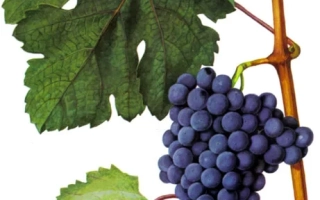
Early Purple is a universal grape variety developed by Russian breeders, characterized by high frost resistance down to -25...-27°C and resistance to a range of diseases, including mildew and berry grey rot. Bushes are medium-sized, reaching a height of 2-2.5 m, with well-ripening canes. Leaves are of medium and large size, three-lobed with a pitted surface, having a light green color with rare hispid hairing underneath. Flowers are bisexual, which ensures the self-pollinating nature of the variety. Bunches are conical, medium-sized, loose, weighing from 85 to 156 g, with a long green peduncle. Berries are round, purple-blue with a bluish-grey waxy bloom, dense skin, and juicy flesh with an original muscat aroma and pleasant taste. Each berry contains 2-3 seeds, and the juice is colorless and constitutes 84% of the fruit mass. The variety is distinguished by its early ripening period – berries begin to ripen by the end of July, however, to achieve the best taste qualities, harvesting is recommended in the first decade of September for fresh consumption and in the third decade of September for winemaking. The vegetative period is about 134 days at a sum of active temperatures of 2651°C. Early Purple grows well in both warm regions and the middle belt and north, where it requires winter cover. It is undemanding to soils, capable of developing even on heavy and slightly saline soils, and can be cultivated both on plains and on slopes of various directions. High yield of the variety is preserved even in non-irrigated conditions, while the percentage of fruiting shoots reaches 78%, and the average number of bunches per shoot is 1.4-1.8. Due to the dense skin and resistance to fungal diseases, berries maintain their market appearance well after harvesting. Must sugar content varies from 16 to 22 g/100 ml, and low acidity (about 3.8 g/l) and pronounced muscat aroma make this grape ideal for producing high-quality aromatic juice and dessert wines. The variety is distinguished by its high ability to regenerate fruiting shoots and is suitable for various training systems, including cordon without a trunk and two-armed cordons.
Video · 10 videos
Suggest a video →Crop & resistance
Crop
Disease resistance
Specifications hover over for a hint about the specification
| Usage Group | |
|---|---|
|
Ripening Period
Ripening Period
It takes 70-100 days until pepper reaches flowering stage, 130-160 days until technical fruit ripeness, and 135-180 days until physiological ripeness. |
Early |
| Cold Resistance | |
| Resistance to Mildew | |
| Resistance to Gray Mold | |
|
Yield
Yield
Overall bulb harvest per unit area. Depends on both onion variety characteristics and agronomic practices, fertilizers, and irrigation. Under optimal growing conditions, an onion yield of 100 tons per hectare and above is not considered record-breaking. |
High |
| Bush Growth Power | |
| Flower Type | |
| Bunch Size | Medium (300–500 g) |
| Berry Size | Medium (2–5 g) |
| Berry Color | |
| Flavor | |
| Sugar Content | Average (16–20%) |
| Zoning | |
| Care Requirement | |
| Assignment | |
| Features | |
| Registration year | 1965 |
| Catalog | Catalog → Grape |
| Manufacturer | FRSC |
| Legal data |
Show · 7
|
| Country | Russia |
Not yet комментариев. Be the first!
Alternatives
Grapevine saplings · similar varieties


SURUCHENSKY WHITE
Производственно-аграрное Объединение Массандра
076 7 offers
0.39 €per seedling ≈ 20 ₴

See also
Often considered together with this variety




Recently viewed
Products you’ve viewed on this site
Reviews · 0