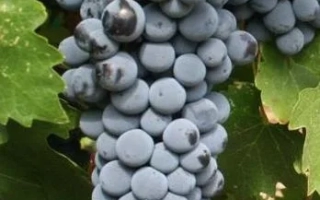
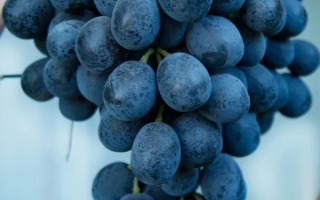
Golubok — an early-ripening technical grape variety, characterized by a vegetative period of about 130 days from bud break to full maturity. Medium-statured plant with good lignification of one-year shoots (85-90%). Leaves of medium size, round shape, dark green, tough, nearly entire or three-lobed. Flowers are hermaphroditic. Bunches are conical or cylindrical-conical, often with wings, medium density and size (15-17 cm in length, 9-11 cm in width), with short herbaceous stems. Average bunch weight is 100-120 grams; on fruiting shoots, 1.8-2.4 bunches form, with a yield per plant of 40-45 buds. Berries of the Golubok variety are round, medium-sized (about 15 mm in diameter), black in color with strong waxy coating. Skin is thin but tough, pulp juicy, and juice intensely colored. Flavor is simple and pleasant with characteristic notes of black currant and poppy. Average weight of 100 berries is about 160 grams. Sugar content reaches 22-23 g/100 ml, acidity — 6-8 g/l. Bunch composition is typical for wine varieties, with high juice content (about 79%), making the variety especially valuable for producing deeply colored table, fortified, and dessert wines, as well as blended juices. Golubok is characterized by high yield — in experimental plantings it reached 114 centners per hectare. Plants are recommended to be trained as double-arm cordons on 80 cm tall trunks, with fruiting canes pruned to leave 6-8 buds. The variety is resistant to fungal diseases such as mildew and oidium, and gray rot is observed only in epidemic years. It is also tolerant to root phylloxera and exhibits higher winter hardiness compared to European grape varieties. Due to these qualities, Golubok is a reliable choice for growers focused on producing high-quality technical grapes.