


SKU #70005
·
57 views
Turnip PINK HONEY
Turnip
Гетерозисная селекцияUser rating
0 votes0% positive reviews
No ratings yet — be the first.
Root vegetable color
Purple, Pink
Meat
Dense, Juicy, Fibrous, White
Flavor
Semi-sweet
Ripening Period
45, 60
Store offers · 1 from 1 stores
Prices are updated on loadLoading offers…
Available at: Seemnemaailm
Aggregator catalog: prices are collected automatically from store websites, normalized by AI and converted at the current exchange rate. Before ordering, confirm the price and availability on the store's website. This block is not indexed by search engines — the data is loaded after the page opens.
About product

The 'Pink Honey' turnip is an early-maturing, high-yield salad variety that ripens approximately 45–60 days after sowing. The roots have an oval-flat shape with a lilac-pink top and a white tip, weighing from 100 to 330 grams depending on growing conditions. Under the thin skin lies dense, juicy, and crisp white flesh with a sweet taste without bitterness, featuring mild cabbage notes and a recogn…
Root vegetable color
Purple, Pink
Meat
Dense, Juicy, Fibrous, White
Flavor
Semi-sweet
Ripening Period
45, 60
Description
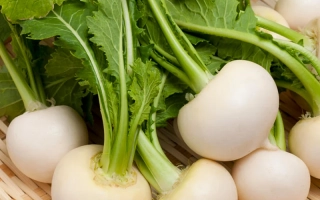
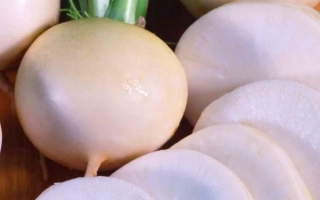
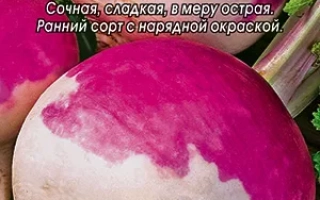
The 'Pink Honey' turnip is an early-maturing, high-yield salad variety that ripens approximately 45–60 days after sowing. The roots have an oval-flat shape with a lilac-pink top and a white tip, weighing from 100 to 330 grams depending on growing conditions. Under the thin skin lies dense, juicy, and crisp white flesh with a sweet taste without bitterness, featuring mild cabbage notes and a recognizable turnip aroma. Due to its taste qualities and low spiciness, this variety is excellent for fresh consumption, salads, okroshkas, and cold soups, as well as cooking, baking, and other culinary treatments. 'Pink Honey' turnip is also valued for its high content of minerals, beta-carotene, and antioxidants, which contribute to strengthening health and protecting body cells.
For successful cultivation, it is recommended to plant turnips in loose, fertile soil with neutral acidity, avoiding excess humus. Optimal planting times are early spring (late April – early May) or mid-to-late summer for winter storage. Seeds are sown at a depth of 1.5–2 cm with row spacing of 15–30 cm, and after seedlings emerge, thinning is conducted, leaving 5–15 cm between plants. Turnips require regular and abundant watering, especially in hot weather, as well as loosening and weeding to maintain plant health. Mineral top dressings and wood ash are used as fertilizers to increase soil pH, especially on poor soils.
The variety is distinguished by good resistance to bolting, diseases, and pests such as cruciferous flea beetles and slugs, while pests do not significantly affect root development. The harvest is collected selectively as it ripens, starting in July, while for winter storage, harvesting is conducted before frost. Turnips are stored in boxes with sand at a temperature of 0–1 °C, ensuring long-term preservation of freshness and taste. Thanks to its unique characteristics and versatility, 'Pink Honey' turnip is an excellent choice for varied and healthy nutrition, including dietary and therapeutic, especially for diabetes and obesity.
For successful cultivation, it is recommended to plant turnips in loose, fertile soil with neutral acidity, avoiding excess humus. Optimal planting times are early spring (late April – early May) or mid-to-late summer for winter storage. Seeds are sown at a depth of 1.5–2 cm with row spacing of 15–30 cm, and after seedlings emerge, thinning is conducted, leaving 5–15 cm between plants. Turnips require regular and abundant watering, especially in hot weather, as well as loosening and weeding to maintain plant health. Mineral top dressings and wood ash are used as fertilizers to increase soil pH, especially on poor soils.
The variety is distinguished by good resistance to bolting, diseases, and pests such as cruciferous flea beetles and slugs, while pests do not significantly affect root development. The harvest is collected selectively as it ripens, starting in July, while for winter storage, harvesting is conducted before frost. Turnips are stored in boxes with sand at a temperature of 0–1 °C, ensuring long-term preservation of freshness and taste. Thanks to its unique characteristics and versatility, 'Pink Honey' turnip is an excellent choice for varied and healthy nutrition, including dietary and therapeutic, especially for diabetes and obesity.
Crop & resistance
Crop
Pest resistance
Specifications hover over for a hint about the specification
| Root vegetable color | |
|---|---|
| Meat | |
| Flavor | |
|
Ripening Period
Ripening Period
It takes 70-100 days until pepper reaches flowering stage, 130-160 days until technical fruit ripeness, and 135-180 days until physiological ripeness. |
45, 60 |
| From emergence to harvest (days) | 45, 60 |
| Root vegetable shape | |
| Root vegetable mass, g | 100, 120, 150, 200, 250, 300 |
| Assignment | |
| Recommended planting density (plants per m²) | 40 |
| Growing Season | 45, 60 |
| Features | |
| Registration year | 2021 |
| Catalog | Catalog → Turnip |
| Manufacturer | Гетерозисная селекция |
| Country | Russia |
Not yet комментариев. Be the first!


See also
Often considered together with this variety





Recently viewed
Products you’ve viewed on this site
Reviews · 0