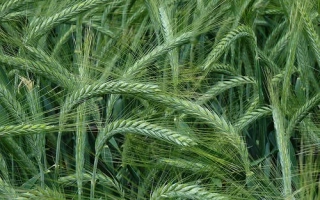
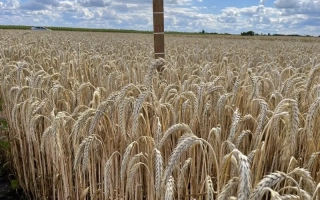
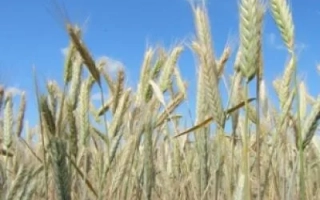
Ratne is a winter triticale variety, an artificially created cereal and forage crop obtained by crossing wheat and rye. This versatile variety was registered in 2007 and recommended for cultivation in the Steppe, Forest-Steppe, and Polesie regions. Triticale Ratne has a medium-late maturity with a vegetation period of 275-285 days, plant height of 125-140 cm, and a strong stem resistant to lodging. The variety has high winter hardiness, ensuring reliable winter survival and stable yields.
The variety is characterized by high yield potential: grain can reach 10.0 t/ha, and green mass up to 55 t/ha. The quality of grain and forage mass is also high, with protein content in grain at 13.3% and starch at 68%. Due to these indicators, the alcohol yield from one ton of meal is 462 liters, making Ratne attractive for use in various agro-industrial sectors. Optimal sowing dates are from September 1 to 15, with seeding rates of 3-5 million germinating seeds per hectare depending on sowing dates and preceding crops.
Triticale as a crop possesses a unique combination of economically-biological properties of its parent forms — wheat and rye. This is manifested in high yield potential, enhanced adaptability, resistance to fungal diseases, as well as increased protein and lysine content in grain and essential nutrients in green mass. Due to these qualities, triticale Ratne is considered one of the most suitable crops for the biologicalization of agricultural production.