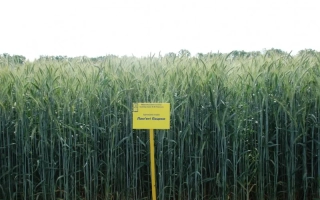
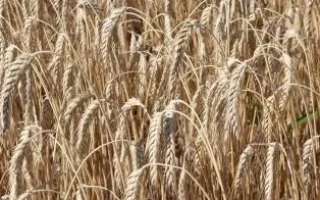
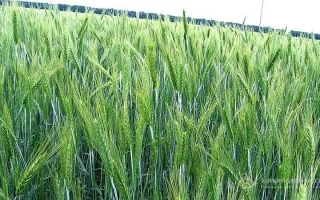
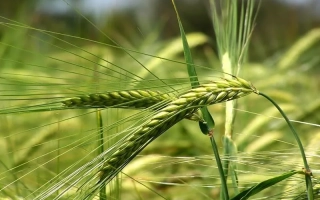
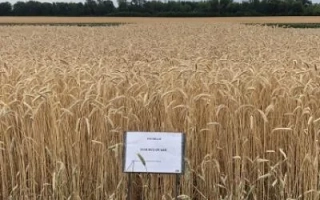
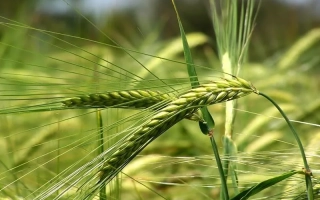
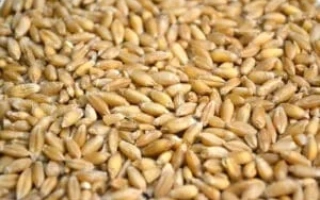
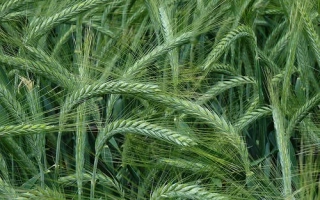
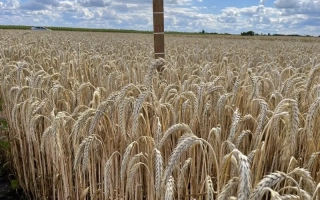
Navarra is a winter triticale variety developed by hybridizing triticale of the variety Rozivska 6 with spelt wheat, followed by crossing the F1 hybrids with spring triticale Khlibodar Kharkivsky. Through repeated individual selection, sample 491 was selected for its high yield and grain quality. The average yield in the Polissia region reached 5.46 t/ha, exceeding the regional average by 1.0 t/ha, while in the Forest-Steppe region — 5.26 t/ha. The variety features high protein content in the grain (13.1%), 1000-grain weight of 48.6 g, and grain density of 690 g/l, indicating its high quality and suitability for various agrotechnical conditions.
Navarra exhibits resistance to adverse environmental factors, making it a reliable choice for cultivation under challenging climatic conditions. State scientific and technical expertise conducted between 2015–2018 in 17 regional centers of Ukraine confirmed the variety’s superiority in yield and grain quality. In 2019, the variety was officially included in the State Register of Plant Varieties recommended for distribution in Ukraine, with emphasis on the Polissia region.
To enhance the phytosanitary condition of triticale Navarra crops, fungicidal bio-preparations are recommended. Treating seeds with microbial preparations Biozlok and Melanoriz, as well as applying the biofungicide Baktofit after sowing, helps suppress diseases such as mosaic, streaked spot, and septoria. The effectiveness of protection depends on moisture conditions, with the best results achieved by combining Melanoriz and Baktofit, which reduces head infection and helps maintain yield.