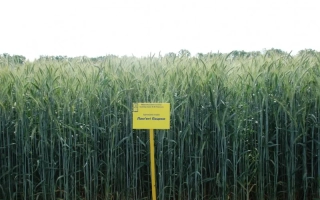
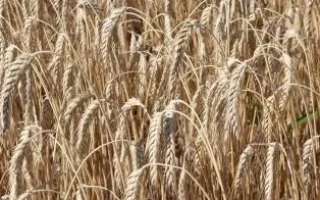
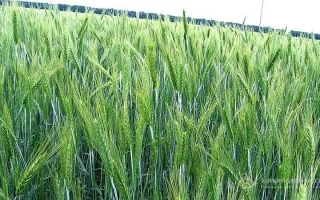
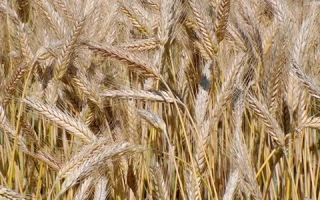
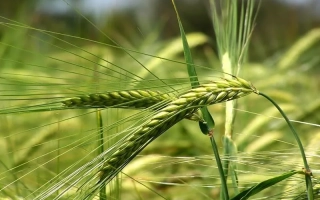
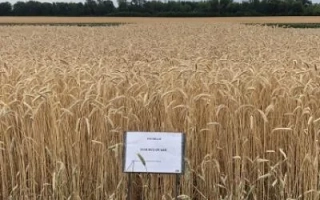
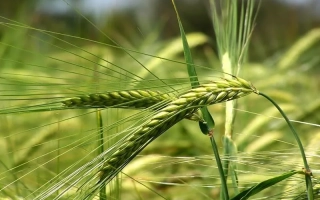
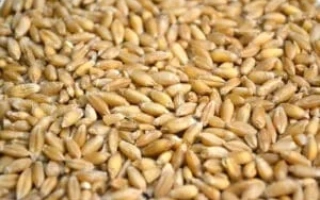
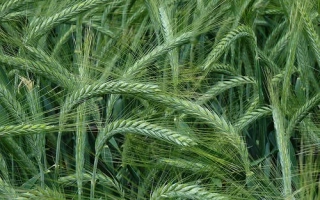
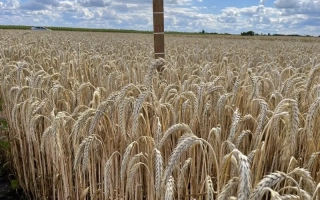
Molfar is a winter triticale variety developed by the Institute of Agronomy of NAAN, Ukraine. It is intended for cultivation in the Forest-Steppe and Steppe zones of Ukraine and is characterized by high yield, reaching 6.9 tons per hectare. The growing period of the variety is 307-310 days, which allows it to successfully adapt to various climatic conditions. The plant stem reaches a height of 110-125 cm and is not filled with parenchyma, while the ear has a spiny, spindle-shaped form up to 13 cm long. The grain is large, elongated, pale pink in color, closer to wheat type, with a 1000-grain weight of 48-51 grams and protein content reaching 14.4%. The Molfar variety exhibits increased resistance to lodging, shattering, and most diseases, except for snow mold. Due to this, it practically does not require additional protection against leaf, ear, and root diseases. The cold and drought resistance of the variety are above average, making it a reliable choice for cultivation under variable climatic conditions. In addition, Molfar demonstrates good competitiveness against weeds, which simplifies agronomic care and reduces costs for crop treatments. Triticale Molfar is widely used in agricultural practice, including sowing, crop maintenance, and harvesting. Its high productivity and resistance to adverse factors make this variety attractive to farmers aiming to achieve a stable and high-quality harvest. Cultivation recommendations are oriented towards the Forest-Steppe zone of Ukraine, where the variety shows its best performance and provides high economic returns.