Topinambur Podolsky 94 — this is a perennial variety of topinambur, distinguished by high yield and good disease resistance. The plant reaches a height of about 1.5 meters, has large egg-shaped leaves and bright yellow inflorescences. The variety is especially recommended for cultivation in the middle zone of Russia, where it demonstrates excellent winter hardiness and is adapted to local climatic conditions. For successful cultivation, good drainage and sufficient sunlight are required, and the agronomic practices of planting and care are standard for topinambur: planting is done in early spring or autumn at a depth of 6–12 cm, with regular loosening, hoeing, and hilling.
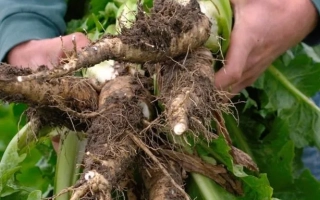
The tubers of topinambur Podolsky 94 are edible and have high nutritional value. They contain up to 3% protein, mineral salts, inulin, fructose, B1, C vitamins, carotene, and other beneficial substances. Thanks to this, topinambur is widely used as a food crop, as animal feed, and as raw material for technical processing. The plant can form up to 30 tubers per plant, ensuring a significant yield and making it promising for various applications.
Moreover, topinambur is a resilient crop capable of withstanding drought and frost, making it attractive under changing climate conditions. It can be used not only in the food industry and animal husbandry, but also as a bioenergy crop for ethanol production. Thus, the variety Podolsky 94 represents a versatile plant with a broad range of applications, combining simple agronomy, high productivity, and beneficial properties.