


SKU #50613
·
41 views
Gerda
Tomato
Агрофирма АэлитаUser rating
0 votes0% positive reviews
No ratings yet — be the first.
Product Type
Seeds; Seed material
Plant Type
Determinant
Maturation Period
120-130 days
Fruit Weight
60-80 grams
Store offers · 1 from 1 stores
Prices are updated on loadLoading offers…
Available at: Цветок Шоп
Aggregator catalog: prices are collected automatically from store websites, normalized by AI and converted at the current exchange rate. Before ordering, confirm the price and availability on the store's website. This block is not indexed by search engines — the data is loaded after the page opens.
About product

A high-yielding, determinate tomato variety known for its exceptional transportability and long shelf life in commercial farming.
Product Type
Seeds; Seed material
Plant Type
Determinant
Maturation Period
120-130 days
Fruit Weight
60-80 grams
Description
Field Reliability and Performance
The 'Gerda' tomato from Agrofirma Aelita is a top choice for growers prioritizing consistency. As an agronomist, I appreciate the simplicity of managing this determinate variety. Because it is a determinate type, it eliminates the need for endless staking and pruning, allowing for more efficient field management throughout the season.
Technical Specifications
With a maturity period of 120–130 days, 'Gerda' is a mid-late variety that rewards patience with significant yields. At a recommended planting density of 40,000 to 60,000 plants per hectare, this cultivar consistently reaches between 70 and 100 tons per hectare. It is a workhorse designed for large-scale production.
Logistics and Storage Advantages
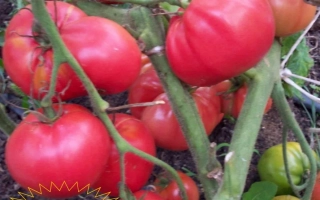
The standout feature of 'Gerda' is its durability. The round, 60-80 gram fruits are firm and handle transportation exceptionally well. They don't bruise or leak during transit, making them perfect for supply chains that cover long distances. Furthermore, their storage shelf life exceeds 30 days post-harvest, giving the owner the flexibility to wait for better market prices instead of selling immediately.
- Plant Type: Determinate (low maintenance).
- Fruit Weight: Consistent 60-80 g, ideal for processing or fresh market.
- Yield Potential: 70-100 tons per hectare.
- Shelf Life: Maintains quality for over 30 days after harvest.
For growers looking for a reliable, commercial-grade tomato that minimizes labor costs and survives the supply chain intact, 'Gerda' is a proven performer.
Crop & resistance
Crop
Specifications hover over for a hint about the specification
| Product Type | |
|---|---|
| Plant Type | |
|
Maturation Period
Maturation Period
Vegetation period from emergence to technical maturity 30-50 days. |
120-130 days |
|
Fruit Weight
Fruit Weight
Tomato fruits are classified by weight as: very small — less than 20 grams; small — 20 — 50 grams; medium — 50 — 100 grams; large — 100 — 200 grams; very large — more than 200 grams. |
60-80 grams |
|
Fruit Shape
Fruit Shape
Modern tomato varieties have a diverse fruit shape: flat, flat-round, round, oval, elongated-oval, pear-shaped, plum-shaped, cube-shaped, and cylindrical. On poorly fertile soils and under unfavorable growing conditions, tomato fruits may take on a more rounded shape. |
|
| Transportability | |
|
Storage
Storage
Depending on the variety characteristics, the storage period for heads may vary from one month for early varieties to eight months for late cabbage varieties. |
More than 30 days |
|
Yield
Yield
Overall bulb harvest per unit area. Depends on both onion variety characteristics and agronomic practices, fertilizers, and irrigation. Under optimal growing conditions, an onion yield of 100 tons per hectare and above is not considered record-breaking. |
70-100 tons |
|
Recommended Density
Recommended Density
Optimal productivity is achieved at a planting density of 4000-5500 plants/ha. Possible planting scheme: 300-500x40-80 cm. |
40-60 thousand pcs/ha |
| Registration year | 2015 |
| Catalog | Catalog → Tomato |
| Manufacturer | Агрофирма Аэлита |
| Legal data |
Show · 6
|
| Country | Russia |
Not yet комментариев. Be the first!
Alternatives
Tomato seeds · similar varieties





See also
Often considered together with this variety





Recently viewed
Products you’ve viewed on this site
Reviews · 0