


SKU #72999
·
72 views
TARRAGON
Tarragon
User rating
0 votes0% positive reviews
No ratings yet — be the first.
Flavor
Slightly Bitter
Scent
Bright
Usage
Culinary, Preservation, Medicine
Registration year
2008
About product

A stable tarragon variety with a high concentration of essential oils for culinary and medicinal use.
Flavor
Slightly Bitter
Scent
Bright
Usage
Culinary, Preservation, Medicine
Registration year
2008
Description
Technical and Agronomic Profile: Estragon "Gribovchanin"
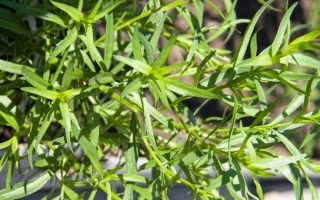
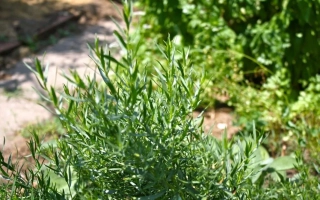
Estragon (tarragon) variety "Gribovchanin" is a product of rigorous breeding at the Federal Scientific Center for Vegetable Production (FGBNU FNTSO), developed by Y.P. Shevchenko and V.F. Pivovarov. Originating from the Vegetable Research Station’s academic center, this variety was engineered for high adaptability and stable chemical composition.
Technical Specifications and Organoleptic Properties
- Flavor Profile: The variety features a distinct bitter undertone, serving as an indicator of high essential oil content, specifically estragole.
- Aroma: Intense and persistent scent, retaining its potency even after thermal processing.
- Application: The plant’s genetic architecture is optimized for three primary use cases: culinary seasoning, food preservation, and medicinal herbalism.
Practical Importance of the Variety
Unlike wild-growing tarragon, "Gribovchanin" offers predictable chemical stability. Breeders focused on maximizing aromatic concentration, making this variety indispensable for culinary applications where spice must maintain its integrity within acidic environments like marinades. In medical contexts, its bactericidal properties—resulting from the specific chemical balance achieved at the research center—are highly valued.
Crop & resistance
Crop
Specifications
| Flavor | |
|---|---|
| Scent | |
| Usage | |
| Registration year | 2008 |
| Catalog | Catalog → Tarragon |
| Legal data |
Show · 7
|
| Country | Russia |
Store offers
Prices are updated on loadLoading offers…
Aggregator catalog: prices are collected automatically from store websites, normalized by AI and converted at the current exchange rate. Before ordering, confirm the price and availability on the store's website. This block is not indexed by search engines — the data is loaded after the page opens.
Not yet комментариев. Be the first!







See also
Often considered together with this variety


Recently viewed
Products you’ve viewed on this site
Reviews · 0