


SKU #73006
·
61 views
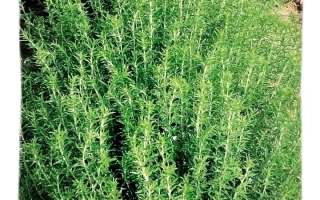
Savory ELEKTROUM
Savory
User rating
0 votes0% positive reviews
No ratings yet — be the first.
Herbs
Chabre
Growth Type
Annual herbaceous plant
Assignment
Culinary
Registration year
2023
About product

A pungent annual with a concentrated aroma, ideal for culinary production and home food preservation.
Herbs
Chabre
Growth Type
Annual herbaceous plant
Assignment
Culinary
Registration year
2023
Description
Cultivation features and practical experience
When working with the 'Elektrum' variety, it is important to consider its origin: the breeding program of the Crimean Research Institute of Agriculture adapted this plant to southern climates, making it highly responsive to intense sunlight. As an annual, summer savory requires a strict sowing schedule; in temperate climates, it functions as a short-cycle crop where each day of vegetation significantly impacts the concentration of essential oils.
Agrotechnical nuances
- Planting and maintenance: The plant does not tolerate waterlogging. An optimal planting scheme helps minimize weeding costs, as the crop closes rows quickly when properly cared for, blocking weed access.
- Harvesting: Peak aromatic activity is observed at the onset of the flowering stage. For culinary purposes, 'Elektrum' should be harvested before the stems become woody, ensuring a stable yield of high-quality dry matter.
- Resource and productivity: Yield stability depends directly on soil drainage. Since this is an annual plant, the plot is easily repurposed after harvest — the soil is not depleted by the specific root exudates common in perennials.
Culinary application
'Elektrum' stands out for its rich, peppery profile. Unlike wild-growing forms, this variety exhibits uniform shoot maturation, which is critical for both mechanical and manual harvesting in large volumes. The leaves and young shoots retain their aroma even after intense thermal processing, making this variety a favorite for marinades and meat preparations.
Crop & resistance
Crop
Specifications
| Herbs | |
|---|---|
| Growth Type | |
| Assignment | |
| Registration year | 2023 |
| Catalog | Catalog → Savory |
| Legal data |
Show · 1 |
| Country | Russia |
Store offers
Prices are updated on loadLoading offers…
Aggregator catalog: prices are collected automatically from store websites, normalized by AI and converted at the current exchange rate. Before ordering, confirm the price and availability on the store's website. This block is not indexed by search engines — the data is loaded after the page opens.
Not yet комментариев. Be the first!


Briz
Сельскохозяйственное Селекционно-производственное Предприятие Сортсемовощ
066 1 offer
2 388.5 €per 1 kg ≈ 120 699 ₴



See also
Often considered together with this variety









Recently viewed
Products you’ve viewed on this site
Reviews · 0