


SKU #73009
·
52 views
Savory CRIMEAN EMERALD
Savory
User rating
0 votes0% positive reviews
No ratings yet — be the first.
Herbs
Chabre
Growth Type
Perennial herbaceous plant
Assignment
Culinary, Medicinal
Registration year
2015
About product

Crimean Emerald is chabern of the Lamiaceae family, cultivated using individual selection. The bush is compact, 50–70 cm high and about 80 cm in diameter, yet branching with up to 100 shoots per bush. Leaves are dark green, linear-lanceolate, 2–2.5 cm long and 0.5 cm wide, covered with glandular dots, which give them a characteristic aroma.The plant flowers in the second half of July, flowering la…
Herbs
Chabre
Growth Type
Perennial herbaceous plant
Assignment
Culinary, Medicinal
Registration year
2015
Description
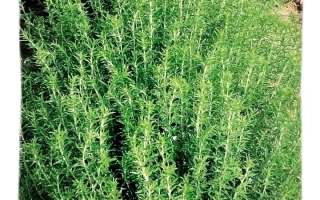
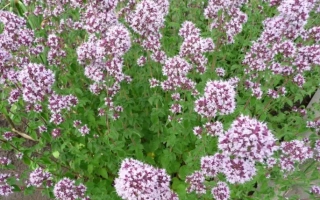
Crimean Emerald is chabern of the Lamiaceae family, cultivated using individual selection. The bush is compact, 50–70 cm high and about 80 cm in diameter, yet branching with up to 100 shoots per bush. Leaves are dark green, linear-lanceolate, 2–2.5 cm long and 0.5 cm wide, covered with glandular dots, which give them a characteristic aroma.
The plant flowers in the second half of July, flowering lasts 40–50 days. Flowers are small (1–1.3 cm) gathered in semi-branched and raceme inflorescences 18–25 cm long. At the mass flowering phase, the above-ground biomass is collected, which is the raw material for essential oil production. Yield is about 80 kg/ha, and the mass fraction of essential oil is 0.56% of the raw mass. The main component of the oil is carvacrol (up to 87%), giving it strong antimicrobial and fungicidal properties.
Crimean Emerald is drought-resistant and withstands frosts down to –20 °C, making it a convenient crop for cultivation in various climatic conditions. In medicine, chabern is used as an anti-inflammatory, spasmolytic, calming agent; it helps normalize sleep, improve digestion, and relieve cough. For external use, chabern is applied as compresses and wet dressings for treating wounds and inflammatory skin diseases. Internal use is via infusion: 1 pyramid (50 g) is steeped in a glass of boiling water for 30 minutes, then taken half a glass four times a day before meals. Such a comprehensive approach makes Crimean Emerald valuable both as an essential oil crop and as a natural spice.
The plant flowers in the second half of July, flowering lasts 40–50 days. Flowers are small (1–1.3 cm) gathered in semi-branched and raceme inflorescences 18–25 cm long. At the mass flowering phase, the above-ground biomass is collected, which is the raw material for essential oil production. Yield is about 80 kg/ha, and the mass fraction of essential oil is 0.56% of the raw mass. The main component of the oil is carvacrol (up to 87%), giving it strong antimicrobial and fungicidal properties.
Crimean Emerald is drought-resistant and withstands frosts down to –20 °C, making it a convenient crop for cultivation in various climatic conditions. In medicine, chabern is used as an anti-inflammatory, spasmolytic, calming agent; it helps normalize sleep, improve digestion, and relieve cough. For external use, chabern is applied as compresses and wet dressings for treating wounds and inflammatory skin diseases. Internal use is via infusion: 1 pyramid (50 g) is steeped in a glass of boiling water for 30 minutes, then taken half a glass four times a day before meals. Such a comprehensive approach makes Crimean Emerald valuable both as an essential oil crop and as a natural spice.
Crop & resistance
Crop
Specifications
| Herbs | |
|---|---|
| Growth Type | |
| Assignment | |
| Registration year | 2015 |
| Catalog | Catalog → Savory |
| Legal data |
Show · 6
|
| Country | Russia |
Store offers
Prices are updated on loadLoading offers…
Aggregator catalog: prices are collected automatically from store websites, normalized by AI and converted at the current exchange rate. Before ordering, confirm the price and availability on the store's website. This block is not indexed by search engines — the data is loaded after the page opens.
Not yet комментариев. Be the first!


Briz
Сельскохозяйственное Селекционно-производственное Предприятие Сортсемовощ
066 1 offer
2 388.5 €per 1 kg ≈ 120 699 ₴




See also
Often considered together with this variety





Recently viewed
Products you’ve viewed on this site
Reviews · 0