


SKU #59005
·
29 views
Sunflower Ataman
Sunflower
WOODSTOCK KFTUser rating
0 votes0% positive reviews
No ratings yet — be the first.
Oil Content
45-50%
Seeds; shape
Narrow-ovoid
Seeds; size
Medium
Vegetation Period
90-100 days, 100-110 days
Prices in stores
from12.3 €per 1 kg
pack from 1.23 € per 100 ml
1 offer from 1 store
Store offers · 1 from 1 stores
Prices are updated on loadLoading offers…
Available at: Niva
Aggregator catalog: prices are collected automatically from store websites, normalized by AI and converted at the current exchange rate. Before ordering, confirm the price and availability on the store's website. This block is not indexed by search engines — the data is loaded after the page opens.
About product

Ataman is a medium-early hybrid of sunflower (Helianthus annuus L.) with high oil content and a classic plant type. It is characterized by high growth without branching, medium-sized leaves with green or dark green coloration, and medium blistered and serrated leaf margins. The florets are yellow-ligulate in oval shape, with orange tubular parts and weakly expressed anthocyanin coloration on the s…
Oil Content
45-50%
Seeds; shape
Narrow-ovoid
Seeds; size
Medium
Vegetation Period
90-100 days, 100-110 days
Description
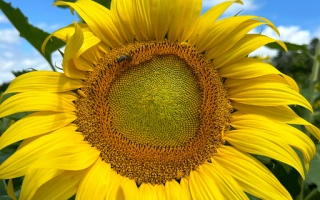
Ataman is a medium-early hybrid of sunflower (Helianthus annuus L.) with high oil content and a classic plant type. It is characterized by high growth without branching, medium-sized leaves with green or dark green coloration, and medium blistered and serrated leaf margins. The florets are yellow-ligulate in oval shape, with orange tubular parts and weakly expressed anthocyanin coloration on the stigmas. The head is of medium size; at maturity, it hangs from being half-turned downwards to fully drooping. The seeds have an oval-elongated shape, medium thickness, and a black main color. The average oil content in the seeds reaches 49-53%, providing high oil content for the hybrid. Ataman is recommended for cultivation in various regions of Russia, including the North Caucasian, Middle Volga, and Ural regions. The vegetation period varies from 101 to 112 days depending on the region. The hybrid's yield is characterized by stability and high productivity: in the North Caucasian region, it is about 18.6-24.3 c/ha, in the Middle Volga region up to 27.4 c/ha, and in the Ural region about 11.2 c/ha. In some tests, the yield reached 35-45 c/ha, indicating the high potential of the hybrid. The mass of 1000 seeds varies from 48.5 to 60 g, which also depends on growing conditions. The Ataman hybrid has high resistance to a number of diseases, including phoma, sclerotinia, rust, and alternaria, as well as genetic resistance to new races of the tumbleweed parasite thanks to the Clearfield® Plus technology. The plant is distinguished by high germination energy, resistance to lodging, and a developed root system that ensures effective moisture use. These qualities make Ataman suitable for cultivation in various climatic zones, including steppes, forest-steppes, and forested areas, allowing for stable and high yields of oilseeds.
Crop & resistance
Crop
Disease resistance
Устойчивость к заразихе
Specifications hover over for a hint about the specification
| Oil Content | 45-50% |
|---|---|
| Seeds; shape | |
| Seeds; size | |
| Vegetation Period | 90-100 days, 100-110 days |
| Basket; shape | |
| Basket; size | |
|
Herbicide Tolerance
Herbicide Tolerance
Unique combination of the herbicide EURO-LIGHTNING®, containing two active ingredients of the imidazolinone class, and high-yielding hybrids resistant to this herbicide, developed using traditional selection methods (without genetic engineering). Advantages of using CLEARFIELD te... |
|
| Registration year | 2008 |
| Catalog | Catalog → Sunflower |
| Manufacturer | WOODSTOCK KFT |
| Country | Hungary |
Not yet комментариев. Be the first!
Alternatives
Sunflower seeds · similar varieties




See also
Often considered together with this variety







Recently viewed
Products you’ve viewed on this site
Reviews · 0