


SKU #43591
·
31 views
Industrial
Sugar Beet
User rating
0 votes0% positive reviews
No ratings yet — be the first.
Direction Type
Sugar-type (Z)
Registration year
1985
About product

A high-sugar variety engineered for superior processing efficiency and yield stability.
Direction Type
Sugar-type (Z)
Registration year
1985
Description
Maximizing Sugar Yield per Hectare
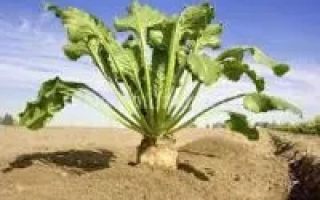
The 'Industrialna' sugar beet variety, developed by the Institute of Molecular Biology and Genetics of Ukraine, is a Z-type (sugar-rich) variety designed for high-performance farming operations. Its primary value proposition lies in balancing consistent root yields with superior sucrose concentration, meeting the stringent requirements of modern sugar refineries.
Practical Scenarios for Field Operations
- Industrial Processing Focus: Due to its high sugar content and dense root structure, this variety is highly efficient for large-scale sugar extraction. It is an ideal candidate for contract farming where refineries prioritize consistency in raw material quality and low processing losses.
- Intensive Cultivation Strategy: 'Industrialna' excels in fertile soils with optimized nitrogen management. Successful growers emphasize the need for a robust fungicide program, particularly to protect the leaf canopy during peak summer growth stages to ensure the sugar storage cycle remains uninterrupted.
From an operational standpoint, the variety demands precision during the planting season. Early seeding in well-prepared seedbeds is essential to allow the crop to establish before the onset of extreme mid-summer heat. Field experience shows that the variety maintains high uniformity, which directly improves harvesting speed and efficiency, reducing the risk of mechanical damage during extraction from the soil.
For agricultural enterprises seeking to optimize the cost-to-sugar ratio, 'Industrialna' provides a reliable, high-yield foundation. When managed within a systematic crop protection and nutrient program, it consistently delivers the throughput required for commercial success in the sugar beet sector.
Crop & resistance
Crop
Specifications
| Direction Type | |
|---|---|
| Registration year | 1985 |
| Catalog | Catalog → Sugar Beet |
| Legal data |
Show · 1
|
| Country | Ukraine |
Store offers
Prices are updated on loadLoading offers…
Aggregator catalog: prices are collected automatically from store websites, normalized by AI and converted at the current exchange rate. Before ordering, confirm the price and availability on the store's website. This block is not indexed by search engines — the data is loaded after the page opens.
Not yet комментариев. Be the first!
Alternatives
Sugar beet seeds · similar varieties





See also
Often considered together with this variety




Recently viewed
Products you’ve viewed on this site
Reviews · 0