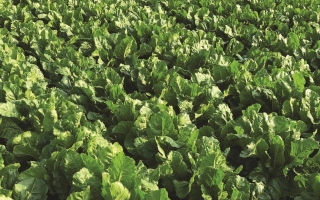
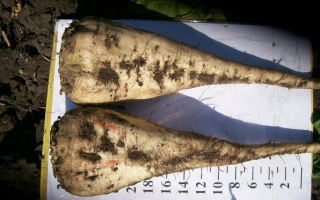
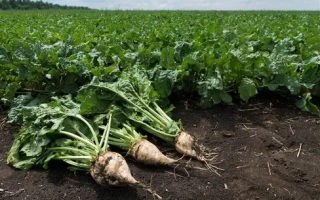
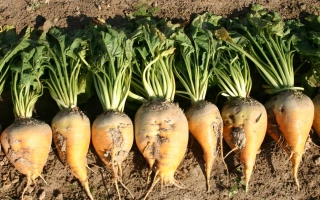
Sugar beet variety 6 K_1301 is a mid-season diploid hybrid designed for cultivation in all sugar beet growing regions. This variety is distinguished by high yield and sugar content, making it an important crop for sugar production. The root has a cylinder-conical shape, an average weight of about 700 grams, with a smooth surface, which facilitates harvesting and reduces soil adhesion. The placement of the root crown above the field surface corresponds to standard norms, and the vegetation period is up to 120 days. The plant is resistant to various climatic conditions, including heat and cold, and possesses high resistance to diseases such as cercospora, powdery mildew, and root rot. The leaf rosette is semi-spreading, with leaf blades of medium size, entire and moderately corrugated. The root system is taproot, penetrating the soil to a depth of 2-2.5 meters, which contributes to good nutrition and plant stability. Sugar beet 6 K_1301 has universal application. In addition to use in the sugar industry for sugar and molasses production, it is also used in cooking, for example, for making borscht and kvass. Moreover, the crop is used as a waste-free fodder crop, since all parts of the plant contain nutrients. In 100 kg of roots, there are 25 feed units and 1.2 kg of digestible protein, and the tops provide 20 feed units and 2.2 kg of digestible protein, which makes this variety valuable for both food and fodder industries.