


Prices in stores
No offers yet — stores have not added prices for this product yet.
Similar varieties with prices
-
WindsorDEUTSCHE SAATVEREDELUNG AG
from 6.47 €per 1 kg
-
 PROTINARAGT
from 0.69 €per 1 kg
PROTINARAGT
from 0.69 €per 1 kg
-
 Eldorado
from 1.06 €per 1 kg
Eldorado
from 1.06 €per 1 kg
-
 ES VISITOREuralis Semences
from 0.65 €per 1 kg
ES VISITOREuralis Semences
from 0.65 €per 1 kg
Growing Season
110-120 days
Seeds: oil content
22-23%
Seeds: protein content
35-37%, 39-41%
Registration year
2001
Your mark
0 votes
0% positive ratings
Description
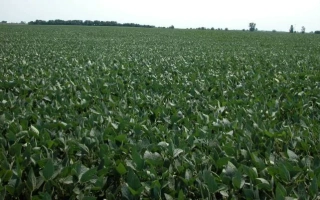
Soa variety SOER 6 is a mid-early or early-ripening variety of Glycine max (L.) Merr., adapted to the conditions of the Volga region, Southern Urals, and the Central Black Earth region. This variety was created by individual selection from an F4 hybrid population 'Belor x L-02' and is characterized by a maturity period of about 110 days. The plant is semi-determinate, indeterminate, of medium height, with rhomboid green side leaflets and white flowers. Seeds have a spherical-flattened shape, yellow color with a brown hilum; the mass of 1000 seeds varies from 128 to 151.3 grams depending on the growing region. The variety is distinguished by high yield and quality seed indicators. In the Lower Volga region, the average yield is 13.8 c/ha, while the maximum reached 28.5 c/ha in the Saratov region. Seeds contain a significant amount of protein — from 30% to 40.9%, as well as fat — about 22.9-24.7%. In terms of dry matter harvest, SOER 6 outperforms standard varieties by 10.6-12.1%, making it advantageous for industrial cultivation and use in food and feed industries. The variety shows resistance to major soya diseases, such as ascohitosis, bacteriosis, and septoria, being weakly affected or not affected at all. Due to these characteristics and adaptation to various climatic conditions, SOER 6 is widely used in crop rotations of irrigated and non-irrigated lands of the Volga region, Southern Urals, and Central Black Earth region. It is recommended for cultivation in Tambov region and other regions with similar agro-climatic conditions.
Crop & resistance
Crop
Disease resistance
Specifications
| Growing Season | 110-120 days |
|---|---|
| Seeds: oil content | 22-23% |
| Seeds: protein content | 35-37%, 39-41% |
| Registration year | 2001 |
| Catalog | Catalog → Soybean |
| Manufacturer | Federal Agrarian Scientific Center of the South-East |
| Legal data |
Show · 7
|
| Country | Russia |
No reviews yet. Be the first to share your experience.
Alternatives
Soybean seeds · similar varieties


See also
Often considered together with this variety






Recently viewed
Products you’ve viewed on this site
Reviews