


SKU #63731
·
51 views
OKSKAYA
Soybean
NGO 'PRIOKSKE'User rating
0 votes0% positive reviews
No ratings yet — be the first.
Plant; plant height
90-100cm
Registration year
1995
About product

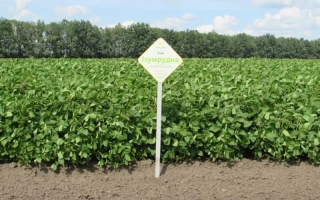
The Okskaya soybean variety represents one of the promising Russian breeding lines adapted for cultivation in the Central region of the Non-Black Earth of Russia, in particular the Kaluga region. Plants of this variety reach an average height of about 92.7 cm, which is one of the indicators of their biological characteristics. Okskaya demonstrates a stable tendency to accumulate dry matter, which…
Plant; plant height
90-100cm
Registration year
1995
Description
The Okskaya soybean variety represents one of the promising Russian breeding lines adapted for cultivation in the Central region of the Non-Black Earth of Russia, in particular the Kaluga region. Plants of this variety reach an average height of about 92.7 cm, which is one of the indicators of their biological characteristics. Okskaya demonstrates a stable tendency to accumulate dry matter, which positively affects the overall productivity of the crop.
The yield of the Okskaya variety is closely related to the level of moisture availability during the vegetation period, including the sum of precipitation and the hydrothermal coefficient, with a high correlation dependence (r = 0.9). This indicates that for the successful cultivation of this variety, optimal climatic conditions are important, especially sufficient moisture. Compared to other varieties, Okskaya shows stable results, which makes it suitable for regions with similar climates.
Soybeans in general are an important crop, rich in protein and used to produce soybean oil and food products. The agrotechnology for growing the Okskaya variety does not differ from general requirements for soybeans: sowing is carried out at soil temperatures ensuring germination, with a seeding depth of about 4–5 cm and rows spaced 40–60 cm apart. Harvest is conducted in September, when the beans begin to crack. After harvesting, the stems can be used for compost, while the roots remain in the soil, contributing to nitrogen nutrition of subsequent crops.
The yield of the Okskaya variety is closely related to the level of moisture availability during the vegetation period, including the sum of precipitation and the hydrothermal coefficient, with a high correlation dependence (r = 0.9). This indicates that for the successful cultivation of this variety, optimal climatic conditions are important, especially sufficient moisture. Compared to other varieties, Okskaya shows stable results, which makes it suitable for regions with similar climates.
Soybeans in general are an important crop, rich in protein and used to produce soybean oil and food products. The agrotechnology for growing the Okskaya variety does not differ from general requirements for soybeans: sowing is carried out at soil temperatures ensuring germination, with a seeding depth of about 4–5 cm and rows spaced 40–60 cm apart. Harvest is conducted in September, when the beans begin to crack. After harvesting, the stems can be used for compost, while the roots remain in the soil, contributing to nitrogen nutrition of subsequent crops.
Crop & resistance
Crop
Specifications
| Plant; plant height | 90-100cm |
|---|---|
| Registration year | 1995 |
| Catalog | Catalog → Soybean |
| Manufacturer | NGO 'PRIOKSKE' |
| Legal data |
Show · 1 |
| Country | Russia |
Store offers
Prices are updated on loadLoading offers…
Aggregator catalog: prices are collected automatically from store websites, normalized by AI and converted at the current exchange rate. Before ordering, confirm the price and availability on the store's website. This block is not indexed by search engines — the data is loaded after the page opens.
Not yet комментариев. Be the first!
Alternatives
Soybean seeds · similar varieties


See also
Often considered together with this variety


Recently viewed
Products you’ve viewed on this site
Reviews · 0