


SKU #74474
·
50 views
Trazerko
Sorghum
User rating
0 votes0% positive reviews
No ratings yet — be the first.
Direction
Grain
Registration year
2009
About product

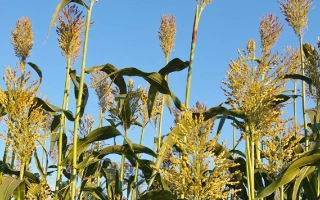
A stable, drought-tolerant grain sorghum variety developed in Ukraine, known for its consistency and reliable yields.
Direction
Grain
Registration year
2009
Description
A Reliable Grain Sorghum for Arid Conditions
Trazerko sorghum, developed by the Institute of Grain Crops of the NAAS, holds a strong position in the Ukrainian agricultural market as a time-tested solution for stable grain production. This variety is exclusively focused on grain yield, making it a strategic asset for farms operating in regions with significant water stress.
Agronomic Potential
Unlike intensive hybrid types, Trazerko shows high plasticity across the soil and climatic conditions of Ukraine. The originator prioritized stress resistance, allowing the variety to effectively withstand high temperatures typical of steppe and forest-steppe regions while maintaining ear productivity. The grain has excellent feed properties, ensuring consistent demand from livestock complexes and feed production facilities.
Market Status
Trazerko remains a preferred choice for growers who value predictable results with moderate investment in sowing material. It is recognized for its genetic purity, the ability to obtain quality seeds on-farm, and resistance to lodging. It represents a classic model of plant breeding where biological reliability is prioritized to minimize risks during unfavorable harvest years.
- Usage: Grain production.
- Origin: Ukrainian breeding (Institute of Grain Crops, NAAS).
- Key Advantage: High adaptability to drought-prone environments.
- Application: Livestock feed production, grain export.
Crop & resistance
Crop
Specifications hover over for a hint about the specification
|
Direction
Direction
Existing varieties and types of cabbage are grown for fresh consumption, long-term storage, and technical processing. |
|
|---|---|
| Registration year | 2009 |
| Catalog | Catalog → Sorghum |
| Legal data |
Show · 1
|
| Country | Ukraine |
Store offers
Prices are updated on loadLoading offers…
Aggregator catalog: prices are collected automatically from store websites, normalized by AI and converted at the current exchange rate. Before ordering, confirm the price and availability on the store's website. This block is not indexed by search engines — the data is loaded after the page opens.
Not yet комментариев. Be the first!
Alternatives
Sorghum seeds · similar varieties




See also
Often considered together with this variety




Recently viewed
Products you’ve viewed on this site
Reviews · 0