


SKU #46608
·
60 views
Stratea
Sorghum
User rating
0 votes0% positive reviews
No ratings yet — be the first.
Direction
Hay, Silage
Registration year
2015
About product

A high-tech sorghum variety designed for consistent production of quality silage and hay in arid environments.
Direction
Hay, Silage
Registration year
2015
Description
Field Management of Strateia Sorghum
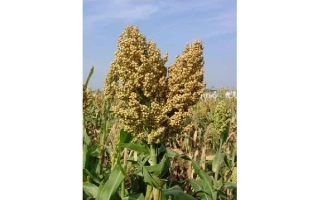
Choosing the 'Strateia' variety for your forage base means opting for operational predictability. Developed by experts at the Institute of Agriculture of the Steppe Zone under the guidance of Borys Dziubetskyi and Oleksii Olizko, this variety is specifically adapted to the harsh climatic conditions of the Ukrainian Steppe. For an operator, this translates into high stress tolerance: the crop retains its vegetative mass even during severe moisture deficits, which is critical for consistent fodder planning.
Operational Performance and Harvesting
Strateia is engineered specifically for forage purposes—hay and silage. Dealing with this variety requires precise combine settings to ensure high-quality shredding of the robust stems. Because the crop maintains uniform growth, harvesting is highly efficient, allowing for optimal packing density in the silo pit, which directly impacts fermentation quality and final feed preservation.
- Harvesting Efficiency: High lodging resistance simplifies mowing operations, enabling higher speeds and cleaner cuts with wide-header machinery.
- Cost Management: Moderate requirements for intensive fertilization allow for better cost control per hectare while maintaining high biomass yields even on average-quality soils.
- Field Uniformity: The crop provides consistent stand density, making it easier to calibrate harvesting equipment and maintain a steady workflow throughout the field.
Managing Strateia fields does not require complex, non-standard agrotechnical protocols. It is a reliable 'workhorse' variety focused on delivering high-volume, high-quality forage for livestock operations, minimizing downtime and unexpected production issues.
Crop & resistance
Crop
Specifications hover over for a hint about the specification
Store offers
Prices are updated on loadLoading offers…
Aggregator catalog: prices are collected automatically from store websites, normalized by AI and converted at the current exchange rate. Before ordering, confirm the price and availability on the store's website. This block is not indexed by search engines — the data is loaded after the page opens.
Not yet комментариев. Be the first!
Alternatives
Sorghum seeds · similar varieties




See also
Often considered together with this variety


Recently viewed
Products you’ve viewed on this site
Reviews · 0