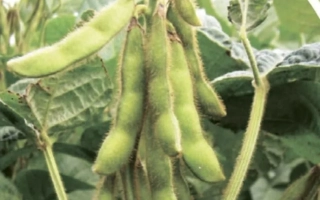
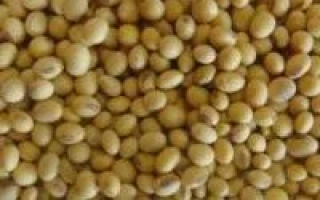
Soybean variety Maja is an annual herbaceous plant of the legume family, characterized by high yield and resistance to various adverse conditions. This early-maturing variety has a vegetative period of 105-110 days and can produce yields up to 38 centners per hectare. Plant height ranges from 90 to 130 cm, and the 1000-seed weight is approximately 130 g. The flowers are purple, with brown hairs, which is a distinctive biological feature of the variety. Protein content in the seeds reaches 41-42%, and fat content — 20-22%, making it valuable for food and feed industries.
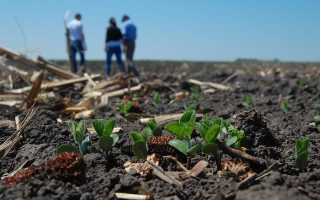
Variety Maja exhibits high resistance to glyphosate-containing herbicides such as Roundup and Hurricane, as well as resistance to most diseases, including phytophthora and sclerotinia. It is adapted for cultivation in various climatic zones, including steppes, forest-steppes, and meadows, and can withstand low temperatures during flowering and fruiting. Recommended seeding density is 800 plants per hectare, with row spacing of 15 or 30 cm. Optimal planting dates are from April 25 to May 1, provided soil temperature reaches 12-14 °C and seed depth is 4-5 cm.
Soybean Maja plays an important role in crop rotation, improving soil structure and enriching it with nitrogen due to its ability to fix atmospheric nitrogen. Monoculture should be avoided, and soy should not be replanted on the same site for at least two years. Suitable preceding crops include cereal crops, corn, sugar beet, potato, and perennial grasses, while sunflower, rapeseed, and other legumes are unsuitable. Additionally, soy can be used as a green manure crop, cut and left on the field to decompose, which helps reduce weed populations and enhance soil fertility.