


SKU #42453
·
73 views
Maya
Soybean
Semences Prograin IncUser rating
0 votes0% positive reviews
No ratings yet — be the first.
Seeds: protein content
37-39%
Registration year
2023
About product

A stable, high-protein Canadian soybean variety designed for high-performance farming.
Seeds: protein content
37-39%
Registration year
2023
Description
Canadian Genetics for Professional Agribusiness
The «Maya» soybean variety, developed by Semences Prograin, represents a standard of Canadian selection expertise. Under the guidance of originator Sylvain Legay, this variety was engineered to bridge the gap between high yield potential and reliable performance in the field, making it a cornerstone for growers prioritizing technological efficiency.
Agronomic Profile and Protein Content
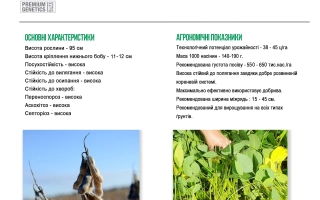
The primary advantage of the «Maya» variety lies in its stable qualitative indicators. With a protein content of 37–39%, it is a highly competitive choice for producers targeting the processing sector. Semences Prograin has focused on ensuring that these protein levels remain consistent across varying soil conditions, providing farmers with a reliable product for contract growing.
Market Positioning
As a key product from the Semences Prograin portfolio, «Maya» is designed for farmers who operate with intensive agricultural technologies. The breeding strategy, led by Sylvain Legay, prioritized plant architecture that supports resistance to lodging and uniformity of maturity. This is essential for modern combine harvesting, where minimizing field losses is as important as maximizing the yield per hectare.
Whether implemented in standard crop rotations or intensive production cycles, «Maya» demonstrates excellent responsiveness to soil management and fertilizer regimes. By selecting this variety, agricultural enterprises invest in a proven, stable Canadian genetic solution that meets both the demand for productivity and the industry standards for high-quality grain.
Crop & resistance
Crop
Specifications
| Seeds: protein content | 37-39% |
|---|---|
| Registration year | 2023 |
| Catalog | Catalog → Soybean |
| Manufacturer | Semences Prograin Inc |
| Legal data |
Show · 2
|
Store offers
Prices are updated on loadLoading offers…
Available at: Агро Пионер
Aggregator catalog: prices are collected automatically from store websites, normalized by AI and converted at the current exchange rate. Before ordering, confirm the price and availability on the store's website. This block is not indexed by search engines — the data is loaded after the page opens.
Not yet комментариев. Be the first!
Alternatives
Soybean seeds · similar varieties




See also
Often considered together with this variety


Recently viewed
Products you’ve viewed on this site
Reviews · 0