


SKU #42461
·
65 views
Soybean Muza
Soybean
User rating
0 votes0% positive reviews
No ratings yet — be the first.
Growing Season
90-100 days
Plant; plant height
80-90cm
Plant: Height of Lower Pod Attachment
12-14cm
Seeds: oil content
20-21%
Store offers · 1 from 1 stores
Prices are updated on loadLoading offers…
Available at: Поділляагрозахист
Aggregator catalog: prices are collected automatically from store websites, normalized by AI and converted at the current exchange rate. Before ordering, confirm the price and availability on the store's website. This block is not indexed by search engines — the data is loaded after the page opens.
About product

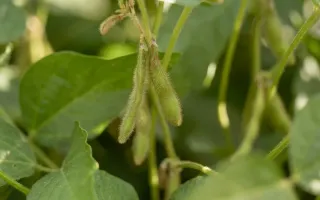
The Musa soybean variety was developed by individual selection from a hybrid population and belongs to the Manchurian subspecies, sordida group. It is a fast-maturing variety with a vegetative period of about 100-102 days, characterized by an intermediate growth type. Plant height reaches 85-90 cm, with lower pods attached at a height of 13-14 cm. Plant hairs are reddish, flowers are purple, and l…
Growing Season
90-100 days
Plant; plant height
80-90cm
Plant: Height of Lower Pod Attachment
12-14cm
Seeds: oil content
20-21%
Description
The Musa soybean variety was developed by individual selection from a hybrid population and belongs to the Manchurian subspecies, sordida group. It is a fast-maturing variety with a vegetative period of about 100-102 days, characterized by an intermediate growth type. Plant height reaches 85-90 cm, with lower pods attached at a height of 13-14 cm. Plant hairs are reddish, flowers are purple, and leaves are trifoliate with broadly ovate leaflets. Seeds are oval, yellow with a brown oval central scar without a 'eye', and the 1000-seed weight is 235-245 g.
Musa is distinguished by high yield, reaching 5 tons per hectare, and high protein (41-42%) and oil (20-21%) content in seeds. The variety is resistant to the most common diseases, as well as to low temperatures during flowering and pod formation. It has reliable resistance to pod cracking and shattering, ensuring stable yield quality and quantity. Due to these characteristics, the variety is recommended for cultivation in forest-steppe and Polissia regions of Ukraine.
For sowing the Musa variety, it is recommended to use a wide-row method with row spacing up to 45 cm or dense planting, with a seeding rate of 110-130 kg/ha. Plant density at harvest should be 650-700 thousand plants per hectare. The variety is suitable for use in feed production and food industry, and can also be used in crop rotation as a preceding crop for winter crops.
Musa is distinguished by high yield, reaching 5 tons per hectare, and high protein (41-42%) and oil (20-21%) content in seeds. The variety is resistant to the most common diseases, as well as to low temperatures during flowering and pod formation. It has reliable resistance to pod cracking and shattering, ensuring stable yield quality and quantity. Due to these characteristics, the variety is recommended for cultivation in forest-steppe and Polissia regions of Ukraine.
For sowing the Musa variety, it is recommended to use a wide-row method with row spacing up to 45 cm or dense planting, with a seeding rate of 110-130 kg/ha. Plant density at harvest should be 650-700 thousand plants per hectare. The variety is suitable for use in feed production and food industry, and can also be used in crop rotation as a preceding crop for winter crops.
Crop & resistance
Crop
Specifications
| Growing Season | 90-100 days |
|---|---|
| Plant; plant height | 80-90cm |
| Plant: Height of Lower Pod Attachment | 12-14cm |
| Seeds: oil content | 20-21% |
| Seeds: protein content | 41-43% |
| Registration year | 2015 |
| Catalog | Catalog → Soybean |
| Legal data |
Show · 1
|
| Country | Ukraine |
Not yet комментариев. Be the first!
Alternatives
Soybean seeds · similar varieties



See also
Often considered together with this variety



Recently viewed
Products you’ve viewed on this site
Reviews · 0