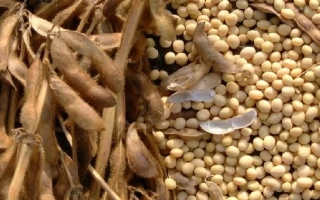
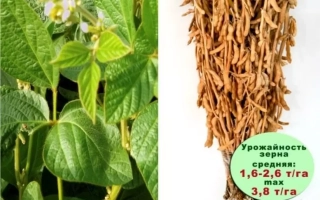
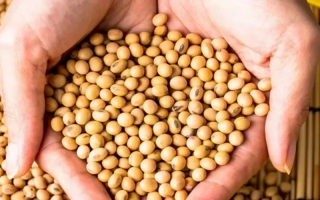
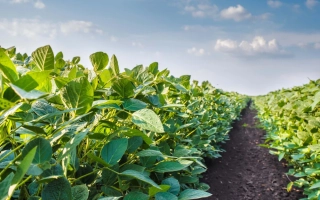
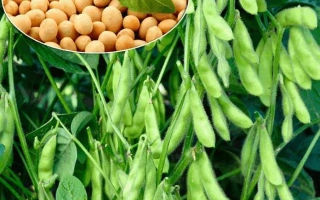
The BONUS soybean variety is an early-maturing crop intended for cultivation in the Russian Far East region, including Amur Oblast and Khabarovsk Krai. The plants reach an average height of about 55 cm, and the mass of 1000 seeds is approximately 188 g. The seeds are characterized by a high protein content of about 40% and fat content of about 23%, making this variety valuable for the food and feed industries. Average yield in the region reaches 20.6 ц/га, while maximum figures can reach up to 34.3 ц/га.
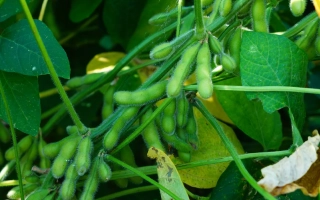
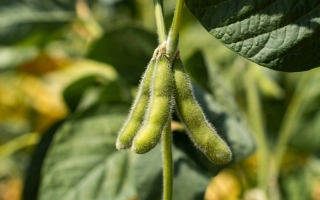
Soy is a monsoon climate crop with high requirements for heat and moisture. Optimal temperatures for various development phases range from 18 to 27 °C; seeds begin to germinate at temperatures from 8 to 10 °C, and seedlings appear faster at higher temperatures. The plant has a taproot system with a powerful main root and long lateral roots penetrating the soil up to 2 meters deep. Stems can be either upright or slightly curved, with varying thickness and length of lateral branches. Leaves are trifoliate and hairy, while flowers are small, white or purple, gathered in raceme-like inflorescences. Pods are beans of various shapes and colors, containing from one to four seeds.
The BONUS variety differs in its good adaptation to the regional climatic conditions and is suitable for mechanized harvest due to leaf drop upon maturation. The high protein and fat content in the seeds makes it attractive for use in the food industry and feed production. For successful cultivation, it is recommended to observe optimal temperature regimes and ensure sufficient soil moisture during the vegetation period.