


SKU #70724
·
51 views
SAGITTARIUS
Ryegrass
North Caucasian FARCUser rating
0 votes0% positive reviews
No ratings yet — be the first.
Assignment
Feed, Lawn
Usage Type
Pasture, Lawn, Hay
Registration year
2001
About product

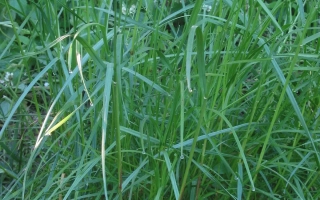
A multi-purpose ryegrass for intensive grazing, quality forage production, and durable turf establishment.
Assignment
Feed, Lawn
Usage Type
Pasture, Lawn, Hay
Registration year
2001
Description
A Versatile Solution for Forage and Landscaping
The «Strelets» ryegrass, developed by the experts at SKFNAZ (FGBNU North Caucasian Federal Agrarian Research Center), is a multi-purpose culture that performs reliably in both intensive livestock farming and professional landscaping. The breeding program, led by V.V. Chumakova and G.G. Gonyan, resulted in a variety that excels in adaptability and biomass productivity.
Practical Scenarios for Your Farm
- Pasture Management: «Strelets» is characterized by rapid regrowth after grazing, making it an essential component for rotational grazing systems. Its high resistance to trampling prevents thinning of the turf, ensuring longevity of the pasture.
- Hay and Forage Production: The variety produces a nutrient-rich mass suitable for high-quality hay and haylage. A favorable leaf-to-stem ratio ensures the protein levels necessary for balanced animal nutrition.
- Lawn and Amenity Use: Due to its dense growth habit, this ryegrass is an excellent choice for turf establishment in parks, recreational areas, and around agricultural facilities. It effectively suppresses weeds and creates a durable ground cover.
Choosing this variety from SKFNAZ means investing in proven selection science. Farmers appreciate «Strelets» for its consistent germination and predictable performance across varying climatic conditions. By integrating this ryegrass into your operations, you can effectively address multiple tasks, from strengthening your feed base to improving the aesthetics of your site.
Specifications
| Assignment | |
|---|---|
| Usage Type | |
| Registration year | 2001 |
| Catalog | Catalog → Ryegrass |
| Manufacturer | North Caucasian FARC |
| Legal data |
Show · 4
|
| Country | Russia |
Store offers
Prices are updated on loadLoading offers…
Aggregator catalog: prices are collected automatically from store websites, normalized by AI and converted at the current exchange rate. Before ordering, confirm the price and availability on the store's website. This block is not indexed by search engines — the data is loaded after the page opens.
Not yet комментариев. Be the first!







See also
Often considered together with this variety



Recently viewed
Products you’ve viewed on this site
Reviews · 0