


SKU #72211
·
64 views
KTUM-ZHUM
Quince
User rating
0 votes0% positive reviews
No ratings yet — be the first.
Assignment
Universal
Type of Sort
Sort
Usage Group
Universal
Ripening Period
150-180
About product

KTUM-ZHUM is a late-winter quince variety of folk selection from Southern Dagestan, widely distributed in the region and adapted for the North Caucasus region. The tree is characterized by vigorous growth: the young crown is narrow-cylindrical, while the fruit-bearing crown is broadly round. Fruits of medium and large size (average weight 250–350 g, up to 800 g) have a high-cylindrical or elliptic…
Assignment
Universal
Type of Sort
Sort
Usage Group
Universal
Ripening Period
150-180
Description
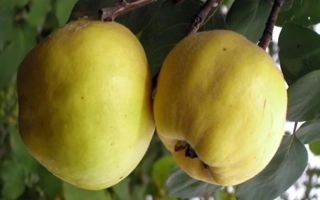
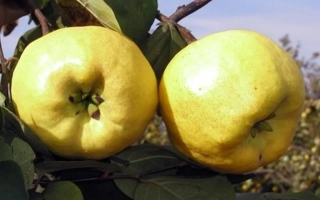
KTUM-ZHUM is a late-winter quince variety of folk selection from Southern Dagestan, widely distributed in the region and adapted for the North Caucasus region. The tree is characterized by vigorous growth: the young crown is narrow-cylindrical, while the fruit-bearing crown is broadly round. Fruits of medium and large size (average weight 250–350 g, up to 800 g) have a high-cylindrical or elliptical shape with a ribbed smooth skin of golden-yellow color. The flesh is light yellow, juicy, and sour-sweet; taste quality is considered above average due to sugar content (≈9 %) and vitamin C (23.1 mg/100 g). Fruits retain freshness until spring, and under ordinary storage conditions can remain suitable for consumption for longer.
The variety begins fruiting in the 5th–6th year after planting and ensures an annual yield. The harvest period falls in late September–early October; fruits reach consumer maturity one month after picking, which allows them to be stored until February with proper handling. Yield ranges from 25 to 30 tons/hectare. KTUM-ZHUM is resistant to fungal diseases and pests, though it may be susceptible to damage by codling moth.
Fruits of this variety are suitable for both direct fresh consumption and making compotes, jams, purees, marmalade, or baked goods. Thanks to their juiciness and moderate acidity, they easily turn into aromatic desserts and drinks. Propagation is done via layering, root suckers, and grafting (bud grafting), ensuring stable retention of variety characteristics.
The variety begins fruiting in the 5th–6th year after planting and ensures an annual yield. The harvest period falls in late September–early October; fruits reach consumer maturity one month after picking, which allows them to be stored until February with proper handling. Yield ranges from 25 to 30 tons/hectare. KTUM-ZHUM is resistant to fungal diseases and pests, though it may be susceptible to damage by codling moth.
Fruits of this variety are suitable for both direct fresh consumption and making compotes, jams, purees, marmalade, or baked goods. Thanks to their juiciness and moderate acidity, they easily turn into aromatic desserts and drinks. Propagation is done via layering, root suckers, and grafting (bud grafting), ensuring stable retention of variety characteristics.
Specifications hover over for a hint about the specification
| Assignment | |
|---|---|
| Type of Sort | |
| Usage Group | |
|
Ripening Period
Ripening Period
It takes 70-100 days until pepper reaches flowering stage, 130-160 days until technical fruit ripeness, and 135-180 days until physiological ripeness. |
150-180 |
| Flavor | |
|
Fruit Color
Fruit Color
The fruit color of tomato varieties is influenced by the combination of skin and flesh color. Some varieties have transparent skin, others — yellow. When combined differently, the fruits can acquire quite diverse colors. The fruit color is affected by pigments (lycopene) and thei... |
|
| Meat Texture Consistency | |
| Height and shape of the tree | |
| Disease Resistance | |
| Laziness | |
| Features | |
| Registration year | 1947 |
| Catalog | Catalog → Quince |
| Legal data |
Show · 2
|
| Country | Russia |
Store offers
Prices are updated on loadLoading offers…
Aggregator catalog: prices are collected automatically from store websites, normalized by AI and converted at the current exchange rate. Before ordering, confirm the price and availability on the store's website. This block is not indexed by search engines — the data is loaded after the page opens.
Not yet комментариев. Be the first!






See also
Often considered together with this variety







Recently viewed
Products you’ve viewed on this site
Reviews · 0