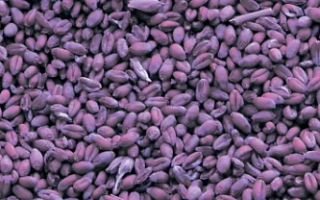
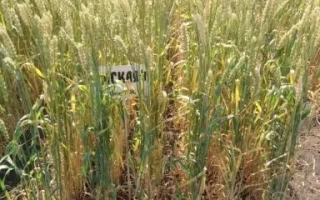
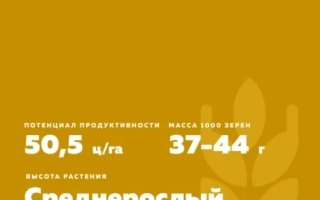
EKADA 253 is a variety of soft spring wheat (Triticum aestivum L.) of the lutescens sub-variety, possessing medium to medium-late maturity characteristics. The plant is of medium height with a semi-erect bush and weak straw, ensuring resistance to lodging. The spike is pyramid-shaped with medium density, white in color with short awn-like branches, and the grain is colored. The mass of 1000 grains varies from 34 to 44 grams, indicating good grain quality. The vegetative period is 80-97 days; the variety matures 2-3 days later than the Altai-100 variety. The variety is distinguished by its resistance to brown rust and moderate resistance to powdery and hard heads, but it is susceptible to powdery mildew and can be severely affected by powdery head and root rot under field conditions. Drought resistance is at the level of standard indicators. The waxy coating on the spike and upper internode of the straw is strongly expressed, which may contribute to protecting the plant from adverse factors. EKADA 253 is recommended for cultivation in various regions of Russia, including Kaluga, Moscow, and Kurgan regions, Altai Krai and the foothills of Krasnoyarsk Krai, as well as the West Siberian and East Siberian regions. The yield of the variety varies depending on the region and weather conditions: in the Central region it is about 37.2 c/ha, in the Urals - 16.8 c/ha, in the West Siberian - 25.1 c/ha, in the East Siberian - 23.2 c/ha, and the maximum yield reached 55.2 c/ha in the Tyumen region. Baking qualities of the variety are assessed as satisfactory filler. EKADA 253 is suitable for cultivation in various climatic conditions, however it requires attention to protection against fungal diseases and provision of optimal moisture in critical development phases.