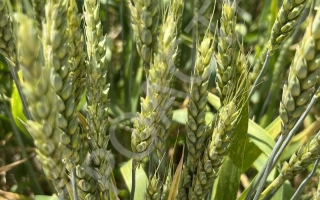
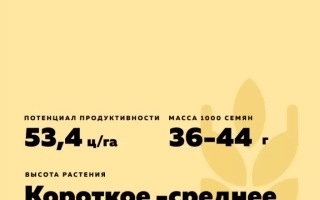
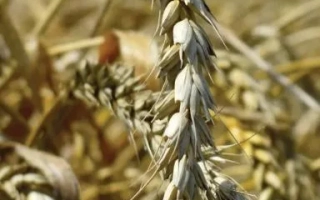
TAULAN is a soft winter wheat variety created by breeders of the Federal Scientific Center of the Kabardino-Balkarian Scientific Center of the Russian Academy of Sciences together with the P.P. Lukyanenko National Grain Center. This medium-maturing variety is characterized by plant heights ranging from 78 to 94 cm and belongs to the two-stem category. The variety's pedigree includes individual selection from a hybrid population involving such varieties as Aftina, Stanichnaya, Saratovskaya 60, and Gubernya. Since 2021, TAULAN has been included in the State Register of Breeding Achievements of the Russian Federation and is recommended for cultivation in various regions of the North Caucasus, including Kabardino-Balkaria, the Chechen Republic, Krasnodar and Stavropol krais, as well as Dagestan, Ingushetia, and North Ossetia-Alania.
The variety is distinguished by high resistance to major wheat diseases, such as brown rust, powdery mildew, head and grain fusarium. It is also resistant to lodging and possesses high frost hardiness comparable to the Bezostaya 1 variety. In case of freezing, the plants demonstrate high regenerative ability. TAULAN forms high yield: the average yield is about 50.4 c/ha, while the maximum reaches 88.0 c/ha, which is confirmed by the results of tests in various climatic conditions of the region.
TAULAN has excellent baking and technological grain qualities. Compared to the benchmark variety Lastochka, it outperforms it in grain nature, weight of 1000 grains, crude protein content, and gluten content for both autumn and spring sowing. The variety achieves the highest yield when sown in so-called 'February windows' — at the beginning of March. Due to its characteristics and stable productivity, TAULAN is recommended as an insurance variety for food purposes and is widely adopted in agricultural practices of the North Caucasian region.