


SKU #52688
·
66 views
Potato SOTOKHKA
Potato
User rating
0 votes0% positive reviews
No ratings yet — be the first.
Direction
Table Potato
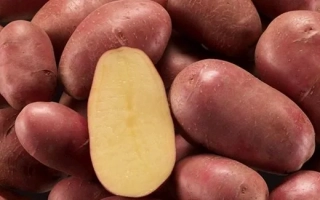
Corm; skin color
Red
Corm; flesh color
Light Yellow
Corm; mass
50-130 grams
Store offers · 1 from 1 stores
Prices are updated on loadLoading offers…
Available at: purple-potatoesru
Aggregator catalog: prices are collected automatically from store websites, normalized by AI and converted at the current exchange rate. Before ordering, confirm the price and availability on the store's website. This block is not indexed by search engines — the data is loaded after the page opens.
About product

Potato variety Sotokha is a medium-maturing table variety developed by Siberian scientists through Russian selection. Plants are of medium height with semi-erect growth habit, large dark green leaves with wavy edges. Flowers have a red-violet corolla with intensity of color ranging from weak to moderate. Tubers are oval-round, with red skin and light-yellow flesh, which becomes flaky and has excel…
Direction
Table Potato
Corm; skin color
Red
Corm; flesh color
Light Yellow
Corm; mass
50-130 grams
Description
Potato variety Sotokha is a medium-maturing table variety developed by Siberian scientists through Russian selection. Plants are of medium height with semi-erect growth habit, large dark green leaves with wavy edges. Flowers have a red-violet corolla with intensity of color ranging from weak to moderate. Tubers are oval-round, with red skin and light-yellow flesh, which becomes flaky and has excellent flavor after boiling. Average weight of marketable tubers ranges from 106 to 180 grams, with starch content varying between 17.8-20.7%.
The variety exhibits high marketability (81-97%) and good storability, reaching 92%, ensuring long-term storage without loss of quality. Yield of Sotokha ranges from 180 to 341 centners per hectare, with maximum yields reaching 468 centners, significantly exceeding standards of some other varieties. Number of tubers per plant ranges from 10 to 14, contributing to stable and high yields.
Sotokha shows resistance to potato scab and moderate resistance to late blight, leaf curl, and striped and wrinkled mosaic. However, the variety is susceptible to infection by golden potato cyst nematode. Due to its characteristics, Sotokha potato is suitable for various preparation methods, including boiling, baking, and mashing, making it a versatile choice for table use.
The variety exhibits high marketability (81-97%) and good storability, reaching 92%, ensuring long-term storage without loss of quality. Yield of Sotokha ranges from 180 to 341 centners per hectare, with maximum yields reaching 468 centners, significantly exceeding standards of some other varieties. Number of tubers per plant ranges from 10 to 14, contributing to stable and high yields.
Sotokha shows resistance to potato scab and moderate resistance to late blight, leaf curl, and striped and wrinkled mosaic. However, the variety is susceptible to infection by golden potato cyst nematode. Due to its characteristics, Sotokha potato is suitable for various preparation methods, including boiling, baking, and mashing, making it a versatile choice for table use.
Crop & resistance
Crop
Disease resistance
Specifications hover over for a hint about the specification
|
Direction
Direction
Existing varieties and types of cabbage are grown for fresh consumption, long-term storage, and technical processing. |
|
|---|---|
| Corm; skin color | |
| Corm; flesh color | |
| Corm; mass | 50-130 grams |
| Starch Content | 17-18%, 18-19%, 19-20% |
| Registration year | 2013 |
| Catalog | Catalog → Potato |
| Legal data |
Show · 11
|
| Country | Russia |
Not yet комментариев. Be the first!
Alternatives
Seed potatoes · similar varieties


See also
Often considered together with this variety






Recently viewed
Products you’ve viewed on this site
Reviews · 0