


SKU #52578
·
72 views
Kazachok
Potato
User rating
0 votes0% positive reviews
No ratings yet — be the first.
Direction
Table Potato
Corm; shape
Round
Corm; skin color
Yellow
Corm; flesh color
Yellow
About product

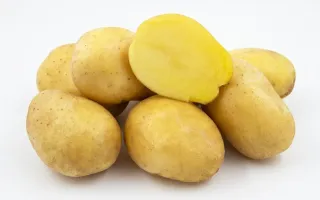
The potato variety Kazachok is a medium-late, table-type variety of Russian selection, intended for cultivation in various climatic conditions, including the Far Eastern regions. The plant is tall, stem-type with a spreading form, green leaves of medium and large size, and large flower heads. Tubers are round in shape with small eyes, and both skin and flesh are yellow. The mass of marketable tube…
Direction
Table Potato
Corm; shape
Round
Corm; skin color
Yellow
Corm; flesh color
Yellow
Description
The potato variety Kazachok is a medium-late, table-type variety of Russian selection, intended for cultivation in various climatic conditions, including the Far Eastern regions. The plant is tall, stem-type with a spreading form, green leaves of medium and large size, and large flower heads. Tubers are round in shape with small eyes, and both skin and flesh are yellow. The mass of marketable tubers varies from 80 to 116 grams, and starch content is 12.6-13.9%, ensuring excellent taste qualities and versatility in culinary use, including soups, salads, and frying. The variety is characterized by high yield, averaging 120-256 centners per hectare, with maximum yields reaching up to 385 centners. Kazachok is resistant to potato cancer pathogen, as well as shows resistance to phytophthora and Colorado beetle, significantly simplifying care and reducing crop losses. However, the variety is susceptible to golden potato cyst nematode and requires regular spraying for disease protection. Tubers have high storability — about 94% — ensuring long-term storage without loss of quality. The Kazachok potato is recommended to be planted from mid-May to early June, when soil temperature is not below 13 degrees. The variety is convenient for cultivation and harvesting, making it attractive for farmers and gardeners. The number of tubers per plant ranges from 6 to 10, contributing to a stable and high-quality yield. Due to its characteristics and adaptability, the Kazachok variety is an excellent choice for those who value high productivity and good taste qualities of potatoes.
Crop & resistance
Crop
Disease resistance
Pest resistance
Specifications hover over for a hint about the specification
|
Direction
Direction
Existing varieties and types of cabbage are grown for fresh consumption, long-term storage, and technical processing. |
|
|---|---|
| Corm; shape | |
| Corm; skin color | |
| Corm; flesh color | |
| Cormorant; eye depth | |
| Corm; mass | 50-130 grams |
| Starch Content | 12-13% |
| Registration year | 2017 |
| Catalog | Catalog → Potato |
| Legal data |
Show · 10
|
| Country | Russia |
Store offers
Prices are updated on loadLoading offers…
Aggregator catalog: prices are collected automatically from store websites, normalized by AI and converted at the current exchange rate. Before ordering, confirm the price and availability on the store's website. This block is not indexed by search engines — the data is loaded after the page opens.
Not yet комментариев. Be the first!
Alternatives
Seed potatoes · similar varieties





See also
Often considered together with this variety




Recently viewed
Products you’ve viewed on this site
Reviews · 0