

SKU #52599
·
75 views
Potato Grand
Potato
Prices in stores
No offers yet — stores have not added prices for this product yet.
Similar varieties with prices
-
SANIBELEuroplant Pflanzenzucht GmbH
from 0.83 €per 1 kg
-
 Queen AnneSolana
from 0.94 €per 1 kg
Queen AnneSolana
from 0.94 €per 1 kg
-
 InaraNORIKA
from 0.08 €per 1 kg
InaraNORIKA
from 0.08 €per 1 kg
-
 ArizonaAGRICO
from 0.77 €per 1 kg
ArizonaAGRICO
from 0.77 €per 1 kg
Direction
Table Potato, French Fries
Time to first harvest
75-85 days
Tuber: shape
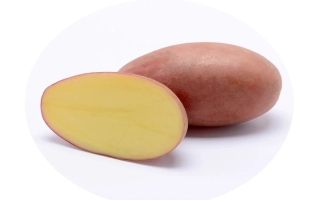
Oval elongated
Tuber: skin color
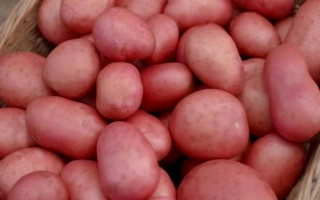
Red
Your mark
0 votes
0% positive ratings
Description
The Grand potato variety is a medium-maturing table variety with elongated-oval, red-skinned tubers and light-yellow flesh. The maturation period is 70-80 days, allowing its use in various agroclimatic conditions. Tubers weigh between 92 and 104 grams, with 7 to 12 tubers per plant. Starch content ranges from 13.4% to 18%, making this variety versatile for culinary use, including boiling, mashing, baking, and processing into crispy potatoes. The flesh does not darken upon cutting or thermal processing, enhancing its consumer appeal. Tubers have a storage capacity of 93%, ensuring good harvest preservation. The plant is of medium height, reaching up to 48 cm, with 4-7 stems per plant, intermediate type and semi-erect. Leaves are medium-sized, green to dark green, and the flower bud has a purplish-red hue. Yield varies from 114 to 387 centners per hectare, with a maximum potential of 506 centners per hectare, significantly exceeding some standard varieties. The variety exhibits resistance to several diseases, including potato cancer (pathotype I) and golden potato cyst nematode. Additionally, it is moderately susceptible to late blight, weakly affected by striped and crinkly mosaic, ring rot, common scab, and rizoctonia, and shows moderate resistance to alternaria. Grand potato is low-maintenance and resistant to mechanical damage, simplifying cultivation and transportation. Due to its high yield, excellent taste, and disease resistance, this variety has quickly gained popularity among agronomists and is an attractive choice for cultivation in various regions. To achieve optimal quality and strong plant immunity, adherence to agronomic practices is recommended, which contributes to improved tuber quality and stable yields.
Video · 2 videos
Suggest a video →Crop & resistance
Crop
Disease resistance
Pest resistance
Specifications
No reviews yet. Be the first to share your experience.
Alternatives
Seed potatoes · similar varieties




See also
Often considered together with this variety







Recently viewed
Products you’ve viewed on this site
Reviews