


SKU #52604
·
55 views
Bravo
Potato
OOO 'AGROFIRMA KRIMM'User rating
0 votes0% positive reviews
No ratings yet — be the first.
Direction
Table Potato
Corm; shape
Round
Corm; skin color
Red, Pink
Corm; flesh color
Light Yellow
About product

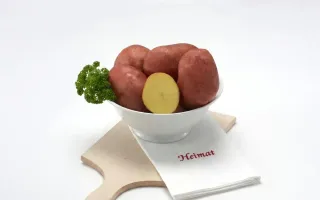
Potato variety Bravo is a medium-early table variety, adapted to various climatic conditions and regionally approved for the Volga-Vyatka, West Siberian, and Ural regions. The plant is of medium height, intermediate type with semi-erect bushes and large dark green leaves. Blossoms have weak anthocyanin coloring. Tubers are round in shape, with smooth surface and medium-depth eyes, colored red or p…
Direction
Table Potato
Corm; shape
Round
Corm; skin color
Red, Pink
Corm; flesh color
Light Yellow
Description
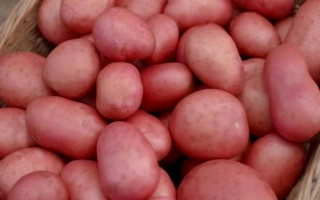
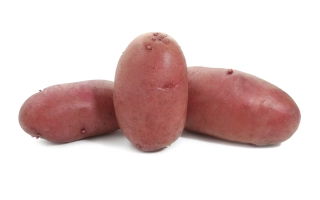
Potato variety Bravo is a medium-early table variety, adapted to various climatic conditions and regionally approved for the Volga-Vyatka, West Siberian, and Ural regions. The plant is of medium height, intermediate type with semi-erect bushes and large dark green leaves. Blossoms have weak anthocyanin coloring. Tubers are round in shape, with smooth surface and medium-depth eyes, colored red or pinkish, with light yellow flesh. Marketable tuber mass ranges from 81 to 180 grams, and starch content is 13.1–15.2%, providing good taste and low susceptibility to breakdown, making the potato suitable for frying, soups, and baking. The variety is characterized by high and stable yield: marketable yield ranges from 210 to 377 centners per hectare, with maximum up to 460 centners. Each plant yields 16 to 22 tubers, of which 72–98% are marketable. Tubers have high storability — 93% — ensuring long-term storage without quality loss. Potato Bravo is low-maintenance, responds well to fertilizers, and is suitable for standard agronomic practices. One of the key advantages of this variety is its high resistance to diseases and pests. Potato Bravo is resistant to potato late blight and golden nematode, and shows moderate resistance to phytophthora, crinkly, and striped mosaic. Additionally, the variety is lightly affected by common scab and viral diseases. Thanks to these qualities and adaptability to diverse conditions, variety Bravo is a reliable choice for cultivation in regions with varied climates.
Video · 1 video
Suggest a video →Crop & resistance
Crop
Disease resistance
Pest resistance
Specifications hover over for a hint about the specification
Store offers
Prices are updated on loadLoading offers…
Available at: Ogorod
Aggregator catalog: prices are collected automatically from store websites, normalized by AI and converted at the current exchange rate. Before ordering, confirm the price and availability on the store's website. This block is not indexed by search engines — the data is loaded after the page opens.
Not yet комментариев. Be the first!
Alternatives
Seed potatoes · similar varieties

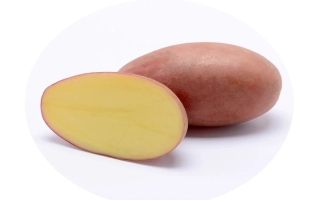


GLORIA
ФГБНУ Федеральный Аграрный Научный Центр Северо-востока имени Н.В. Рудницкого
062 1 offer
21.36 € ≈ 1 103 ₴


See also
Often considered together with this variety





Recently viewed
Products you’ve viewed on this site
Reviews · 0