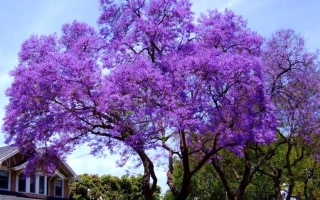
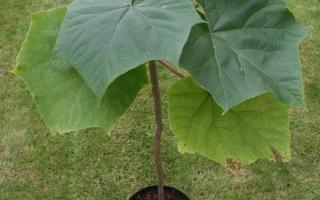
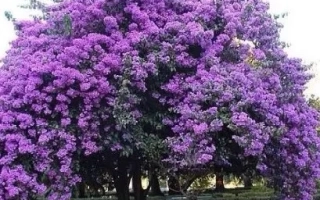
Paulownia 'Energi' is a frost-resistant variety grown via in vitro, intended for industrial use and landscape greening. The seedlings have a height of about 25 cm, well-developed root systems with a closed structure, which ensures resistance to cold down to -28 °C and increased resistance to pests and diseases. With proper care, the tree grows quickly: it reaches a height of 15–20 meters in 4–5 years, and can reach 13–15 meters in 8–10 years.
The wood of 'Energi' is characterized by softness and lightness – it is 30% lighter than similar species, while retaining strength and resistance to bending. This makes the tree in demand for wood production, biofuel (pellets), firewood, and livestock feed. Moreover, the leaves can be used as feed additives or processed into cellulose.
Paulownia 'Energi' also has a significant ecological impact: it releases up to 6 kg of oxygen annually and absorbs about 22 kg of carbon dioxide. Strong taproots, reaching depths of up to 8 meters, improve soil structure and prevent erosion, making the tree ideal for forest restoration and protecting fertile lands. Thanks to its high frost resistance and low soil requirements, the variety is suitable for both industrial cultivation and greening of urban areas.