


SKU #74591
·
57 views
Miscanthus Biotech
Miscanthus
User rating
0 votes0% positive reviews
No ratings yet — be the first.
Decorative Plants
Miscanthus
Type
Giant Miscanthus
Assignment
Erosion Protection
Registration year
2017
Store offers · 1 from 1 stores
Prices are updated on loadLoading offers…
Available at: Райський Куточок · Violakvity
Aggregator catalog: prices are collected automatically from store websites, normalized by AI and converted at the current exchange rate. Before ordering, confirm the price and availability on the store's website. This block is not indexed by search engines — the data is loaded after the page opens.
About product

A powerful hybrid for erosion control and sustainable long-term land management.
Decorative Plants
Miscanthus
Type
Giant Miscanthus
Assignment
Erosion Protection
Registration year
2017
Description
An Energy Shield for Your Soil
The «Biotech» giant miscanthus is far more than a landscape decoration; it is a high-performance biological tool for land reclamation. Unlike standard decorative varieties, this hybrid was bred specifically as a high-yield biomass source, capable of radically transforming soil structure on degraded or erosion-prone lands.
Why Biotech outperforms alternatives
The core strength of this hybrid lies in its dense root system, which acts as an anchor for soil horizons. For landowners struggling with erosion, this is a critical advantage: the plant forms a robust defensive barrier against both wind and water-induced degradation.
- Ecological impact: Due to its rapid growth rate, the hybrid actively sequesters carbon and preserves moisture within the deep soil layers.
- Hardiness: Once established, Biotech requires minimal intervention. In the Ukrainian climate, it shows excellent winter hardiness and resilience against regional pests.
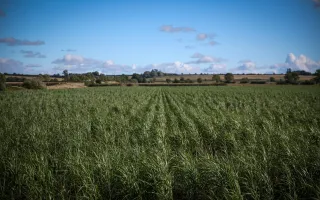
- Functional aesthetics: Tall, lush stems turn agricultural fields into visually appealing landscapes that do not require annual tilling.
Pros and Cons
The primary advantage of this variety is its longevity. A single planting can remain productive for up to 20 years without the need for reseeding. However, it is important to note a potential drawback: during the first two years, the crop requires careful weed management as it focuses its energy on root development. While it is not a 'quick-fix' solution for a single season, it remains the premier choice for those investing in long-term land quality and sustainable soil management.
Crop & resistance
Crop
Specifications
| Decorative Plants | |
|---|---|
| Type | |
| Assignment | |
| Registration year | 2017 |
| Catalog | Catalog → Miscanthus |
| Country | Ukraine |
Not yet комментариев. Be the first!
Alternatives
Miscanthus · similar varieties




See also
Often considered together with this variety






Recently viewed
Products you’ve viewed on this site
Reviews · 0