


SKU #64970
·
61 views
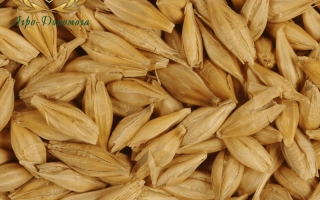
Oat VERNY
Oats
MGTU (Maykop)User rating
0 votes0% positive reviews
No ratings yet — be the first.
Ripeness Group (days)
Medium-maturing (95-110)
Yield
60+
Disease Resistance
Mottling, Rust
Mass of 1000 seeds (g)
28-32, 32-36
About product

The winter oat variety "VERNY" (Avena sativa L.) is a mid-season variety recommended for grain and green fodder cultivation, particularly in the Republic of Adygea. The vegetation period ranges from 249 to 282 days, with ripening occurring simultaneously with the Mezmay variety. The plant is of medium height, about 120 cm, with a semi-spreading or spreading bush, ensuring good soil coverage. The l…
Ripeness Group (days)
Medium-maturing (95-110)
Yield
60+
Disease Resistance
Mottling, Rust
Mass of 1000 seeds (g)
28-32, 32-36
Description
The winter oat variety "VERNY" (Avena sativa L.) is a mid-season variety recommended for grain and green fodder cultivation, particularly in the Republic of Adygea. The vegetation period ranges from 249 to 282 days, with ripening occurring simultaneously with the Mezmay variety. The plant is of medium height, about 120 cm, with a semi-spreading or spreading bush, ensuring good soil coverage. The leaf blade is weakly pubescent, with a light waxy coating and a light green color. The panicle is long, about 30 cm, two-sided with drooping spikelet placement and semi-erected branches. The glume and lower floral lemma are of medium length, white in color, with a weak waxy coating, while the awn is very strong. The variety is characterized by good winter hardiness at the standard level and medium resistance to lodging. The mass of 1000 grains varies from 28 to 37 grams, and the protein content in the grain is 11.7 to 13.0%. Grain chaffiness reaches 23.8%. "VERNY" has resistance to bacterial leaf spot and stem rust, which enhances its reliability under unfavorable growing conditions. Maximum grain yield reaches 64.1 centners per hectare, and dry matter yield is 200.1 centners per hectare, indicating high productivity of the variety. This oat variety is suitable for use in grain production and for obtaining green fodder, making it universal and profitable for agricultural enterprises. Medium resistance to lodging and strong awning ensure crop preservation and grain quality. Thanks to its agronomic characteristics and disease resistance, the "VERNY" variety is a reliable choice for farmers seeking high and stable oat yields.
Crop & resistance
Crop
Disease resistance
Specifications hover over for a hint about the specification
| Ripeness Group (days) | Medium-maturing (95-110) |
|---|---|
|
Yield
Yield
Overall bulb harvest per unit area. Depends on both onion variety characteristics and agronomic practices, fertilizers, and irrigation. Under optimal growing conditions, an onion yield of 100 tons per hectare and above is not considered record-breaking. |
60+ |
| Disease Resistance | |
| Mass of 1000 seeds (g) | 28-32, 32-36 |
| Protein (%) | 12-13 |
| Plant Height | 110-120 |
| Grain-oriented | |
| Usage Type | |
| Registration year | 2006 |
| Catalog | Catalog → Oats |
| Manufacturer | MGTU (Maykop) |
| Legal data |
Show · 1 |
| Country | Russia |
Store offers
Prices are updated on loadLoading offers…
Aggregator catalog: prices are collected automatically from store websites, normalized by AI and converted at the current exchange rate. Before ordering, confirm the price and availability on the store's website. This block is not indexed by search engines — the data is loaded after the page opens.
Not yet комментариев. Be the first!



See also
Often considered together with this variety


Recently viewed
Products you’ve viewed on this site
Reviews · 0