


SKU #47037
·
73 views
Compass
Oats
User rating
0 votes0% positive reviews
No ratings yet — be the first.
Ripeness Group (days)
Medium-maturing (95-110)
Yield
30-40
Mass of 1000 seeds (g)
32-36
Plant Height
80-90
Prices in stores
from0.31 €per 1 kg
pack from 309.85 € per pack
3 offers from 2 stores
Store offers · 3 from 2 stores
Prices are updated on loadLoading offers…
Available at: Хаском Трейд · Khaskom
Aggregator catalog: prices are collected automatically from store websites, normalized by AI and converted at the current exchange rate. Before ordering, confirm the price and availability on the store's website. This block is not indexed by search engines — the data is loaded after the page opens.
About product

A predictable mid-ripening variety that consistently delivers yields up to 4 tons/ha with minimal lodging risk.
Ripeness Group (days)
Medium-maturing (95-110)
Yield
30-40
Mass of 1000 seeds (g)
32-36
Plant Height
80-90
Description
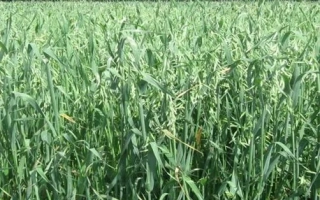
Practical experience in cultivating 'Busol' oats
When selecting seed material for feed or food processing, farmers prioritize stability and predictable outcomes. 'Busol', a classic mid-ripening variety developed by the Synelnykivska Agricultural Research Station, demonstrates disciplined vegetation within 95–110 days. This allows farmers to plan the harvest campaign without the risk of encountering late-season weather extremes.
Operational parameters and field durability
From an agrotechnical management perspective, the variety offers balanced morphological characteristics:
- Plant height ranges from 80 to 90 cm. This is an optimal parameter for combine harvester performance, as the crop is not prone to lodging, which facilitates machine passage and minimizes harvesting losses.
- The weight of 1000 grains varies between 32 and 36 grams. The grain is well-filled, providing a predictable yield for flour or feed production.
With intensive management, the variety is capable of producing yields at a level of 30–40 quintals per hectare. In a standard farming environment, 'Busol' does not require specialized handling: basic crop rotation and timely pest control are sufficient. The crop responds well to fertilizer application and shows reliable performance based on moisture availability.
Versatility of use
The main advantage of 'Busol' is its implementation flexibility. If the crop meets quality standards for the food industry, it serves as a food-grade product. If specifications are slightly lower or if on-farm forage is needed, the variety performs excellently as a component for concentrated feed. The lack of excessive maintenance requirements makes it a reliable asset for agricultural operations of any scale.
Crop & resistance
Crop
Specifications hover over for a hint about the specification
| Ripeness Group (days) | Medium-maturing (95-110) |
|---|---|
|
Yield
Yield
Overall bulb harvest per unit area. Depends on both onion variety characteristics and agronomic practices, fertilizers, and irrigation. Under optimal growing conditions, an onion yield of 100 tons per hectare and above is not considered record-breaking. |
30-40 |
| Mass of 1000 seeds (g) | 32-36 |
| Plant Height | 80-90 |
| Usage Type | |
| Registration year | 2010 |
| Catalog | Catalog → Oats |
| Legal data |
Show · 1
|
| Country | Ukraine |
Not yet комментариев. Be the first!


See also
Often considered together with this variety







Recently viewed
Products you’ve viewed on this site
Reviews · 0