


SKU #65018
·
61 views
Bug
Oats
User rating
0 votes0% positive reviews
No ratings yet — be the first.
Ripeness Group (days)
Medium-maturing (95-110)
Yield
60+
Mass of 1000 seeds (g)
36-40
Protein (%)
12-13
About product

Spring oats of the Bug variety represent a high-quality agricultural crop registered in 1986. This variety was bred and approved for use in the North-Western region, confirming its adaptation to local climatic and soil conditions. The plant is characterized by an erect bush with a sturdy stem of medium thickness and medium-height straw, ensuring resistance to lodging and promoting stable growth.Th…
Ripeness Group (days)
Medium-maturing (95-110)
Yield
60+
Mass of 1000 seeds (g)
36-40
Protein (%)
12-13
Description
Spring oats of the Bug variety represent a high-quality agricultural crop registered in 1986. This variety was bred and approved for use in the North-Western region, confirming its adaptation to local climatic and soil conditions. The plant is characterized by an erect bush with a sturdy stem of medium thickness and medium-height straw, ensuring resistance to lodging and promoting stable growth.
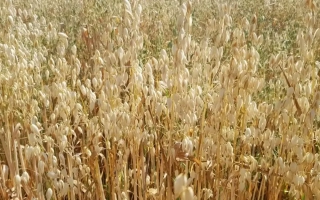
The Bug variety is distinguished by high drought resistance and resistance to many diseases, making it a reliable choice for various soil types, including mineral and peat-mire soils. The panicles are semi-closed, white, of medium length, with dense ears without awns. The grain is of medium size, dense, with a bright yellow color and semi-elongated shape, indicating its high quality. The grain base is bare, without pubescence. The mass of 1000 grains varies from 36.3 to 40.1 grams, and the protein content is in the range of 11.5-15.0%, ensuring nutritional value.
The maturity period of the Bug variety ranges from 83 to 102 days, which corresponds to medium-late maturity. Yield can reach up to 60 centners per hectare, making this variety attractive for use in collective farms, farmer holdings, private households, and garden plots. The grain of this variety is unsuitable for processing into grit and is used primarily as fodder, underscoring its importance in livestock feed bases.
The Bug variety is distinguished by high drought resistance and resistance to many diseases, making it a reliable choice for various soil types, including mineral and peat-mire soils. The panicles are semi-closed, white, of medium length, with dense ears without awns. The grain is of medium size, dense, with a bright yellow color and semi-elongated shape, indicating its high quality. The grain base is bare, without pubescence. The mass of 1000 grains varies from 36.3 to 40.1 grams, and the protein content is in the range of 11.5-15.0%, ensuring nutritional value.
The maturity period of the Bug variety ranges from 83 to 102 days, which corresponds to medium-late maturity. Yield can reach up to 60 centners per hectare, making this variety attractive for use in collective farms, farmer holdings, private households, and garden plots. The grain of this variety is unsuitable for processing into grit and is used primarily as fodder, underscoring its importance in livestock feed bases.
Crop & resistance
Crop
Disease resistance
Specifications hover over for a hint about the specification
| Ripeness Group (days) | Medium-maturing (95-110) |
|---|---|
|
Yield
Yield
Overall bulb harvest per unit area. Depends on both onion variety characteristics and agronomic practices, fertilizers, and irrigation. Under optimal growing conditions, an onion yield of 100 tons per hectare and above is not considered record-breaking. |
60+ |
| Mass of 1000 seeds (g) | 36-40 |
| Protein (%) | 12-13 |
| Grain-oriented | |
| Corn Color | |
| Usage Type | |
| Registration year | 1986 |
| Catalog | Catalog → Oats |
| Legal data |
Show · 5
|
| Country | Russia |
Store offers
Prices are updated on loadLoading offers…
Aggregator catalog: prices are collected automatically from store websites, normalized by AI and converted at the current exchange rate. Before ordering, confirm the price and availability on the store's website. This block is not indexed by search engines — the data is loaded after the page opens.
Not yet комментариев. Be the first!



See also
Often considered together with this variety


Recently viewed
Products you’ve viewed on this site
Reviews · 0