


SKU #73183
·
64 views
KAMIS
Miscanthus
Master Brand LLCUser rating
0 votes0% positive reviews
No ratings yet — be the first.
Decorative Plants
Miscanthus
Dry Matter Yield
20–30 t/ha
Registration year
2018
Store offers · 1 from 1 stores
Prices are updated on loadLoading offers…
Available at: DFB elements
Aggregator catalog: prices are collected automatically from store websites, normalized by AI and converted at the current exchange rate. Before ordering, confirm the price and availability on the store's website. This block is not indexed by search engines — the data is loaded after the page opens.
About product

A high-yielding hybrid for biofuel production and landscape design with yields of up to 30 tons/ha.
Decorative Plants
Miscanthus
Dry Matter Yield
20–30 t/ha
Registration year
2018
Description
Energy Efficiency and Landscape Potential
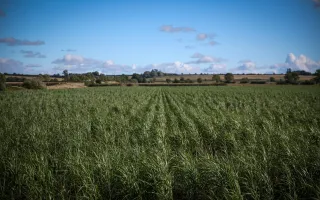
The 'Kamis' miscanthus variety by Master Brend is a prime example of adaptive selection, bridging the gap between industrial biofuel production and ornamental landscaping. Developed in collaboration with leading agricultural research centers, this hybrid shows exceptional productivity in local climatic conditions.
Production Capabilities
The core value of 'Kamis' for the agricultural sector lies in its biomass accumulation potential. When proper agricultural practices are followed, the dry matter yield reaches 20–30 tons per hectare. This makes it a strategic resource for:
- Solid Biofuel Production: Pellets and briquettes produced from miscanthus boast high calorific value and low ash content.
- Pulp and Paper Industry: The fibrous structure of the plant provides high-quality raw material for paper and cardboard manufacturing.
- Renewable Energy Systems: Utilizing this biomass in local boiler houses significantly reduces heating costs for industrial facilities.
Practical Application in Farming
Beyond industrial utility, 'Kamis' is widely used in landscape design and soil remediation. The plant's robust root system effectively prevents soil erosion, while its ornamental qualities allow it to be used for windbreaks, privacy screens, and garden zoning. Unlike many invasive wild species, the 'Kamis' hybrid is easy to manage, simplifying plot maintenance.
For a grower, choosing this variety is a long-term investment: an established miscanthus plantation can remain productive for 15–20 years without the need for reseeding. Planting is done via rhizomes, and the management is reduced to standard weed control during the first growing season until canopy closure.
Crop & resistance
Crop
Specifications
| Decorative Plants | |
|---|---|
| Dry Matter Yield | 20–30 t/ha |
| Registration year | 2018 |
| Catalog | Catalog → Miscanthus |
| Manufacturer | Master Brand LLC |
| Legal data |
Show · 9
|
| Country | Russia |
Not yet комментариев. Be the first!
Alternatives
Miscanthus · similar varieties




See also
Often considered together with this variety







Recently viewed
Products you’ve viewed on this site
Reviews · 0