


SKU #68563
·
58 views
Flora
Lucerne
User rating
0 votes0% positive reviews
No ratings yet — be the first.
Plant Height
80-100
Registration year
1958
Prices in stores
from7 €per 1 kg
pack from 7 € per 1 kg
1 offer from 1 store
Store offers · 1 from 1 stores
Prices are updated on loadLoading offers…
Available at: Флора ЮГ · Квіти Буковини
Aggregator catalog: prices are collected automatically from store websites, normalized by AI and converted at the current exchange rate. Before ordering, confirm the price and availability on the store's website. This block is not indexed by search engines — the data is loaded after the page opens.
About product

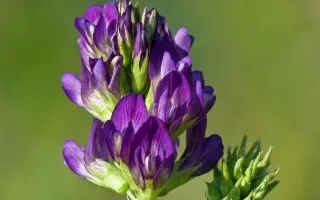
High-yielding alfalfa variety engineered for superior winter hardiness and rapid regrowth cycles.
Plant Height
80-100
Registration year
1958
Description
Genetic Profile and Morphological Precision
The 'Flora' alfalfa variety, developed by the Omsk Agrarian Scientific Center (originators: V. Yu. Voytonis and G. I. Makarova), is engineered to deliver reliable yields under challenging climatic conditions. A plant height of 80–100 cm is a deliberate selection trait, engineered to balance biomass production with the mechanical requirements of harvesting equipment, thereby reducing nutrient loss during the collection process.
Technical Performance Metrics
- Regrowth Dynamics: The variety displays accelerated regeneration post-harvest, facilitating a multi-cut system that maximizes seasonal forage output.
- Structural Integrity: The stem-to-leaf ratio is optimized to provide enough structural rigidity to prevent lodging, while maintaining high digestibility for livestock.
- Cold Tolerance: At its core, the genetic makeup of 'Flora' prioritizes overwintering success. Its capacity to withstand significant temperature fluctuations ensures stand persistence, which is a vital factor for long-term field profitability.
From an agronomic perspective, 'Flora' serves as a critical component in crop rotation strategies. Its deeply penetrating root system not only improves drought resistance but also facilitates soil structure improvement through biological nitrogen fixation. This synergy between yield potential and soil health makes the variety an efficient choice for producers looking to minimize input costs while maximizing output quality per hectare.
Crop & resistance
Crop
Specifications
| Plant Height | 80-100 |
|---|---|
| Registration year | 1958 |
| Catalog | Catalog → Lucerne |
| Legal data |
Show · 6
|
| Country | Russia |
Not yet комментариев. Be the first!
See also
Often considered together with this variety


KRASNOKUTSKAIA VARIEGATED-HYBRID ALFALFA
Federal Agrarian Scientific Center of the South-East
053 3 offers
3.9 €per 1 kg ≈ 201 ₴


Recently viewed
Products you’ve viewed on this site
Reviews · 0