


Flavor
Sour-sweet
Bush height, cm
1.2–1.5
Purpose
For Fresh Consumption, Processing, Freezing
Registration year
1994
Your mark
0 votes
0% positive ratings
Store offers · 3 from 3 stores
3 offers in 3 stores — from 4.84 € per seedling.
Available at: Biosad · JivoSad · Agromir
Prices are collected automatically from store websites and converted at the current exchange rate. Check the price and availability on the store website before ordering.
About product
A versatile variety with a compact bush, ideal for freezing and fresh market sales.
Description
Practical insights on growing «Gerda» honeysuckle
Working with the «Gerda» honeysuckle variety from FANCA, you quickly notice its predictability. This variety is a top choice for those seeking a balance between stable yields and ease of maintenance. The bushes grow compact, reaching 1.2–1.5 meters, which significantly simplifies harvesting and pruning. You won't have to navigate through dense thickets, as is often the case with more sprawling varieties.
Field performance and usage
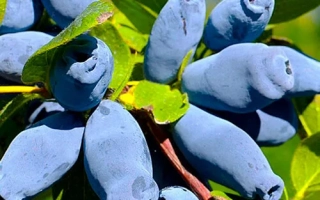
The main value of «Gerda» is its versatility. The berries have a classic sweet-and-sour taste, perfect for both fresh market sales and industrial processing. If you are planning to freeze the harvest, this variety performs exceptionally well: the fruits are firm and do not lose their texture upon thawing, maintaining an attractive commercial appearance. This is crucial if you are supplying HoReCa or retail chains where berry quality post-thaw is a deciding factor.
Agronomy and maintenance
- Planting: The compact nature of the bush allows for optimized planting schemes, maximizing your available land usage.
- Maintenance: Low demand for complex agrotechnical procedures makes it a successful choice for farms with limited staff.
- Resilience: The variety shows strong adaptability, which is typical for high-quality breeding material.
Working with «Gerda» means saving time on daily operations. The berries detach easily, and the bush height allows operators to work throughout the day without excessive back strain. It is a balanced solution for those targeting the premium berry market with high storage requirements.
Video · 3 videos
Suggest a video →Crop & resistance
Crop
Specifications
| Flavor | |
|---|---|
| Bush height, cm | 1.2–1.5 |
| Purpose | |
| Registration year | 1994 |
| Catalog | Catalog → Honeysuckle |
| Manufacturer | FANCA |
| Legal data |
Show · 1
|
| Country | Russia |
No reviews yet. Be the first to share your experience.
Alternatives
Honeysuckle saplings · similar varieties







See also
Often considered together with this variety





Recently viewed
Products you’ve viewed on this site
Reviews