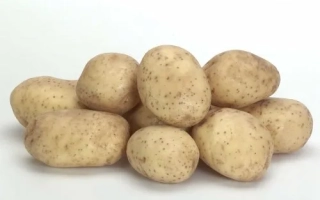
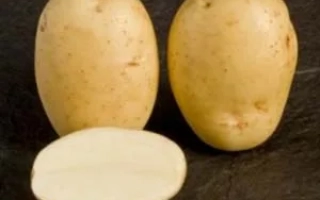
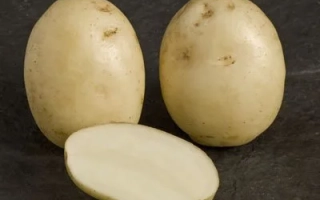
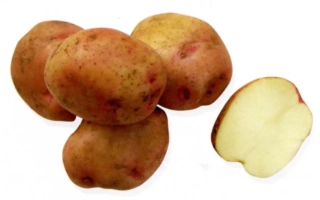
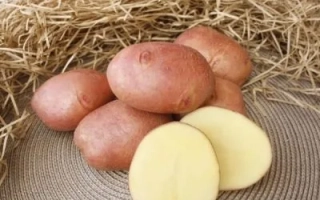
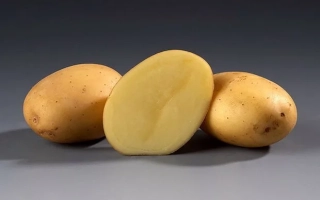
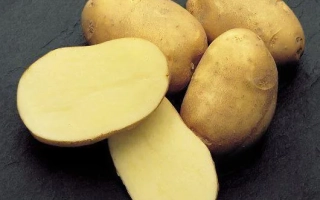
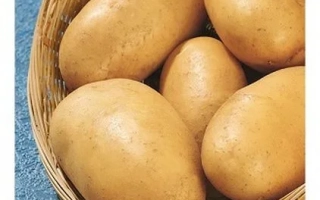
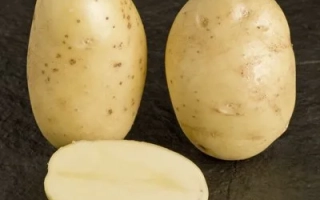
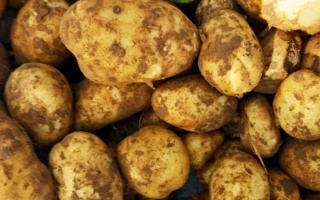
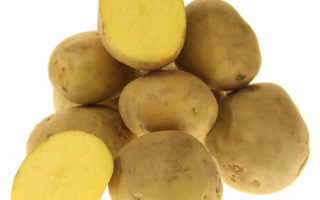
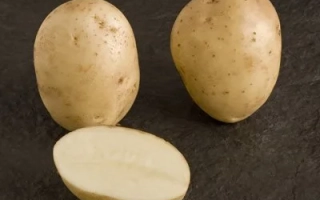
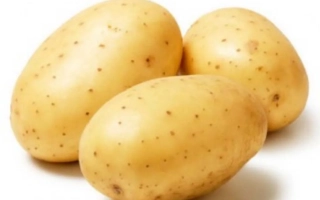
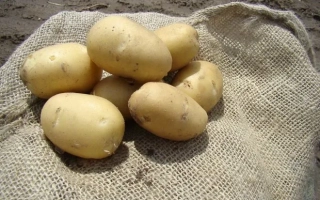
Malamur — a mid-early table potato variety of Russian selection, intended for home gardens and small farming enterprises. Tubers are elongated-oval with small eyes, smooth yellow skin, and white flesh. The average weight of marketable tubers ranges from 110 to 147 grams, and the number of tubers per plant varies from 7 to 14. Starch content is between 15.1–16.6%, making this variety versatile for various cooking methods including frying, boiling, and baking, belonging to the culinary type BC. The taste of the potato is rated as good to excellent.
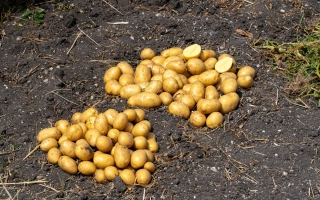
The yield of Malamur is high and stable: marketable yield ranges from 207 to 356 centners per hectare, with maximum yields reaching up to 578 centners per hectare. Tubers’ marketability is 84–96%, and storability is approximately 92–94%, ensuring good product preservation during storage. The variety is not picky about soil fertility and is recommended for cultivation in the East Siberian region of Russia, where it performs well under standard agronomic practices.
Malamur exhibits resistance to potato cancer pathogen, significantly reducing the risk of crop loss. However, the variety is susceptible to golden potato cyst nematode and moderately susceptible to late blight on foliage and tubers. It is also resistant to crinkly mosaic and leaf curling. These characteristics make Malamur a reliable choice for farmers seeking high-quality, flavorful potatoes with good yields and resistance to major diseases.