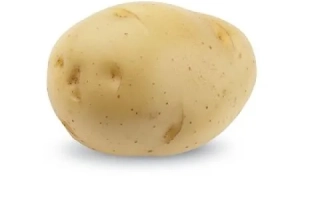
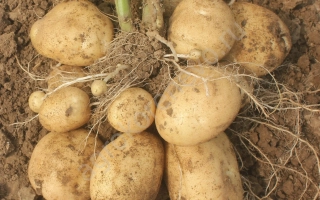
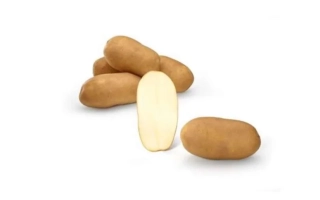
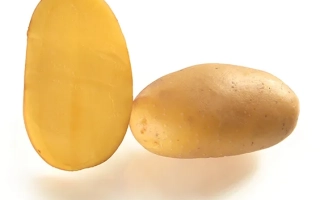
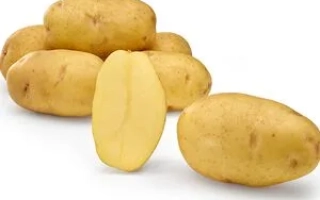
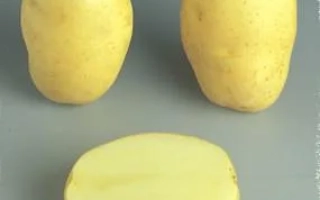
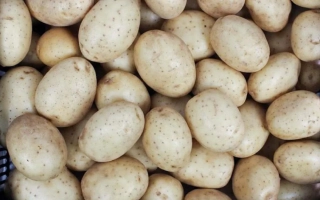
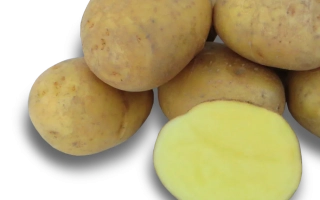
The Dogada potato variety is a medium-early, high-starch table variety developed at Tatar NIIHS. The plant features a tall, spreading bush of intermediate type with medium to large leaves and moderate green color intensity. Tubers have a round shape, light beige skin, beige flesh, small eyes, and yellow eye base coloration. The weight of a single marketable tuber ranges from 160 to 220 grams, with 16 to 22 tubers per plant. Starch content in tubers ranges from 17-19%, providing good taste and culinary type VS, suitable for various cooking methods.
The Dogada variety is distinguished by high yield and marketability: average yield reaches 370 centners per hectare, maximum up to 620 centners, with marketability ranging from 83 to 97% and tuber storability of 97%. The potato is resistant to several diseases, including potato cancer pathogen, cyst nematode, crinkly and striped mosaic, and leaf curl. Additionally, the variety has moderate resistance to phytophthora, common scab, and rhizoctonia, making it a reliable choice for cultivation under various conditions.
Dogada seed potato is suitable for use in home and farm households, ensuring stable and high yields. Thanks to its agronomic characteristics and disease resistance, it produces high-quality tubers with excellent taste. High starch content makes this variety versatile for preparing mashed potatoes, salads, and first courses, enhancing its popularity among consumers.